
আরও দেখুন


 08.04.2026 12:49 AM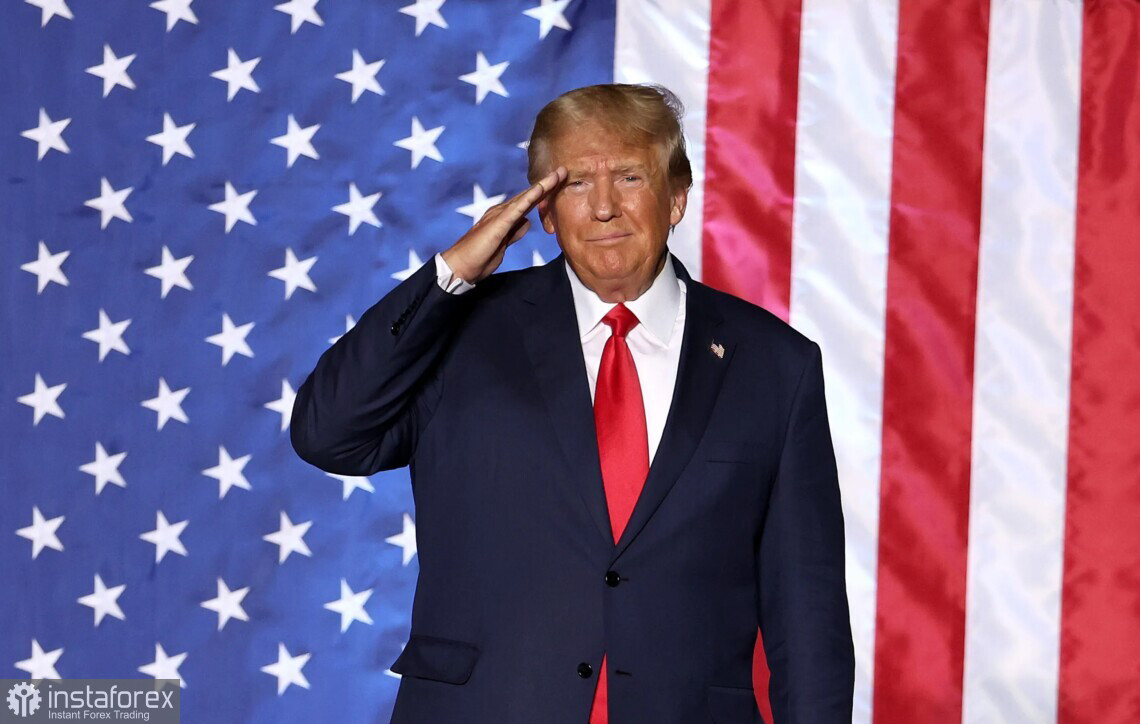
To be honest, it seems to me that Donald Trump now has only one option. Over the past two weeks, the U.S. president has actively escalated tensions around Iran, and in recent days has threatened to completely destroy the Iranian republic. Most likely, this refers to the destruction of the current regime and key infrastructure, as Trump has always spoken highly of the "brave and courageous people of Iran," considering them hostages of the situation. Therefore, today, it will be extremely difficult for the U.S. leader to adhere to the TACO principle and back down.
Trump has not prepared a safeguard for retreat. If his speeches had focused on the success of negotiations, the U.S. president could announce that he would give Iran more time. If he had emphasized achieving most of the set goals, he could declare a total victory over the adversary, making further strikes meaningless. But Trump has focused on the Strait of Hormuz, which remains blockaded.
Thus, in my view, two scenarios are possible today or tomorrow. The first is an escalation scenario, with a 95% likelihood of realization. Trump will strike new blows against Iran's critical infrastructure, which will immediately provoke Iran to respond with fire on critical infrastructure in the Persian Gulf region. The largest data centers responsible for the internet and AI could be destroyed. Naturally, the Strait of Hormuz will remain blockaded, and oil prices will soar even higher.
The second scenario is a de-escalation scenario. Trump will, at the last moment, announce that Iran has made him an offer he cannot refuse, thus delaying the new strike for a certain period to allow for the possibility of negotiating and signing a comprehensive agreement with Tehran. Most likely, Tehran will deny Trump's words within half an hour, but the important factor is Trump's retreat itself. In my view, the likelihood of this scenario does not exceed 5%.
A bad peace is better than a good quarrel. Certainly, most market participants believe in de-escalation. In general, Iran has already destroyed key oil and gas infrastructure in the region, so new strikes should not cause a significant rise in oil and gas prices. At the same time, the markets could be swept by a new wave of panic. This entails a flight of capital from risks into the dollar and the purchase of oil in advance at any price. If escalation does not occur, EUR/USD and GBP/USD instruments will continue to build corrective segments of the trend in line with the current wave structure.
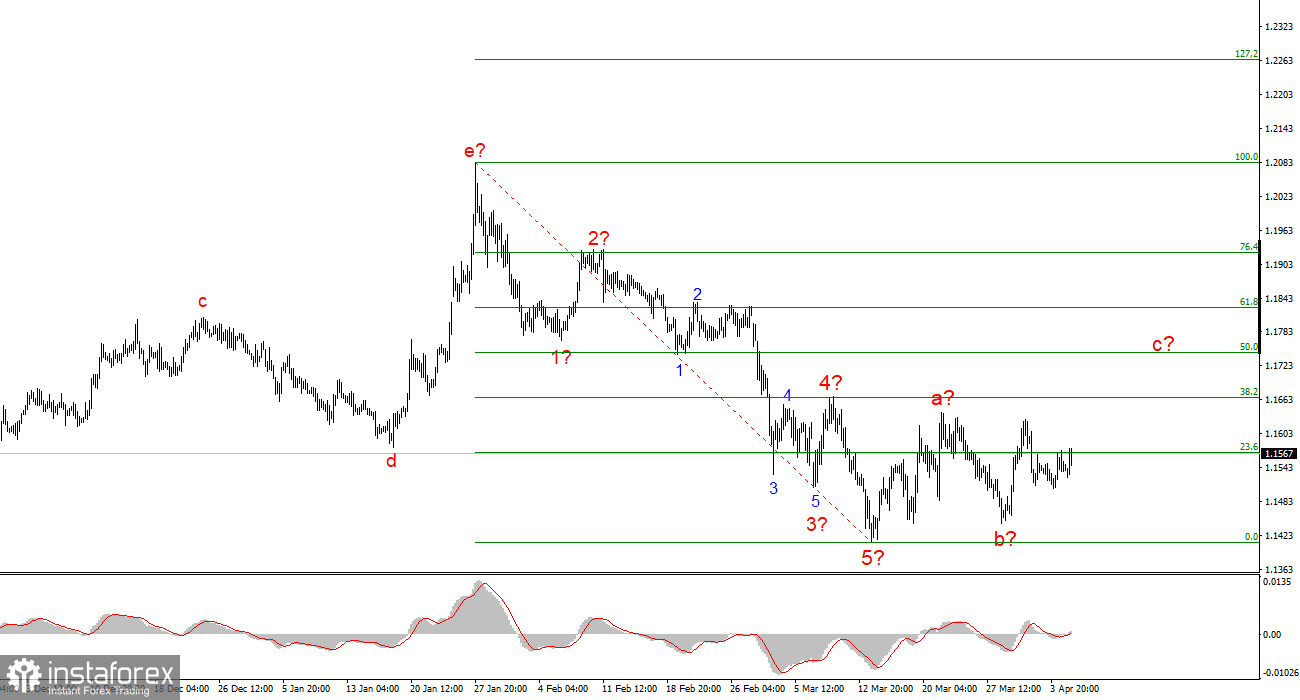
Based on the analysis of EUR/USD, I conclude that the instrument remains within the bounds of an upward trend segment (lower image) and, in the short term, has completed the formation of a downward wave set. Since the five-wave impulse structure is complete, my readers can expect an increase in quotes in the coming week, with targets around 1.1666 and 1.1745, corresponding to 38.2% and 50.0% of the Fibonacci. Further movements of the instrument will depend entirely on events in the Middle East.
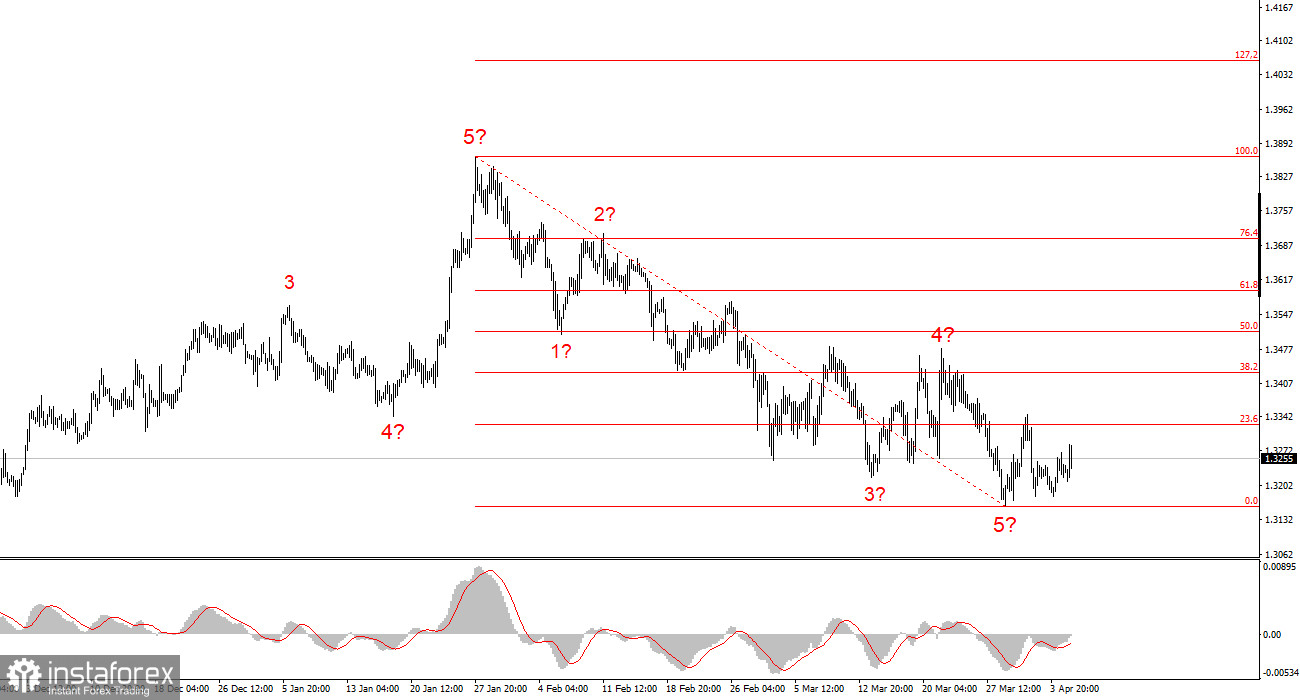
The wave structure for the GBP/USD instrument has become clearer over time, as I anticipated. We now see a clear five-wave downward structure on the charts with an extension in the third wave. If this is indeed the case, and geopolitics does not provoke a new collapse of the instrument in the near future, we can expect the formation of a minimum three-wave corrective structure, within which the pound could rise to levels of 1.3429 and 1.3512, which correspond to 38.2% and 50.0% on the Fibonacci from the last downward wave set. Therefore, it seems to me that now is a good time to buy.


