
Lihat juga


 24.03.2026 10:14 AM
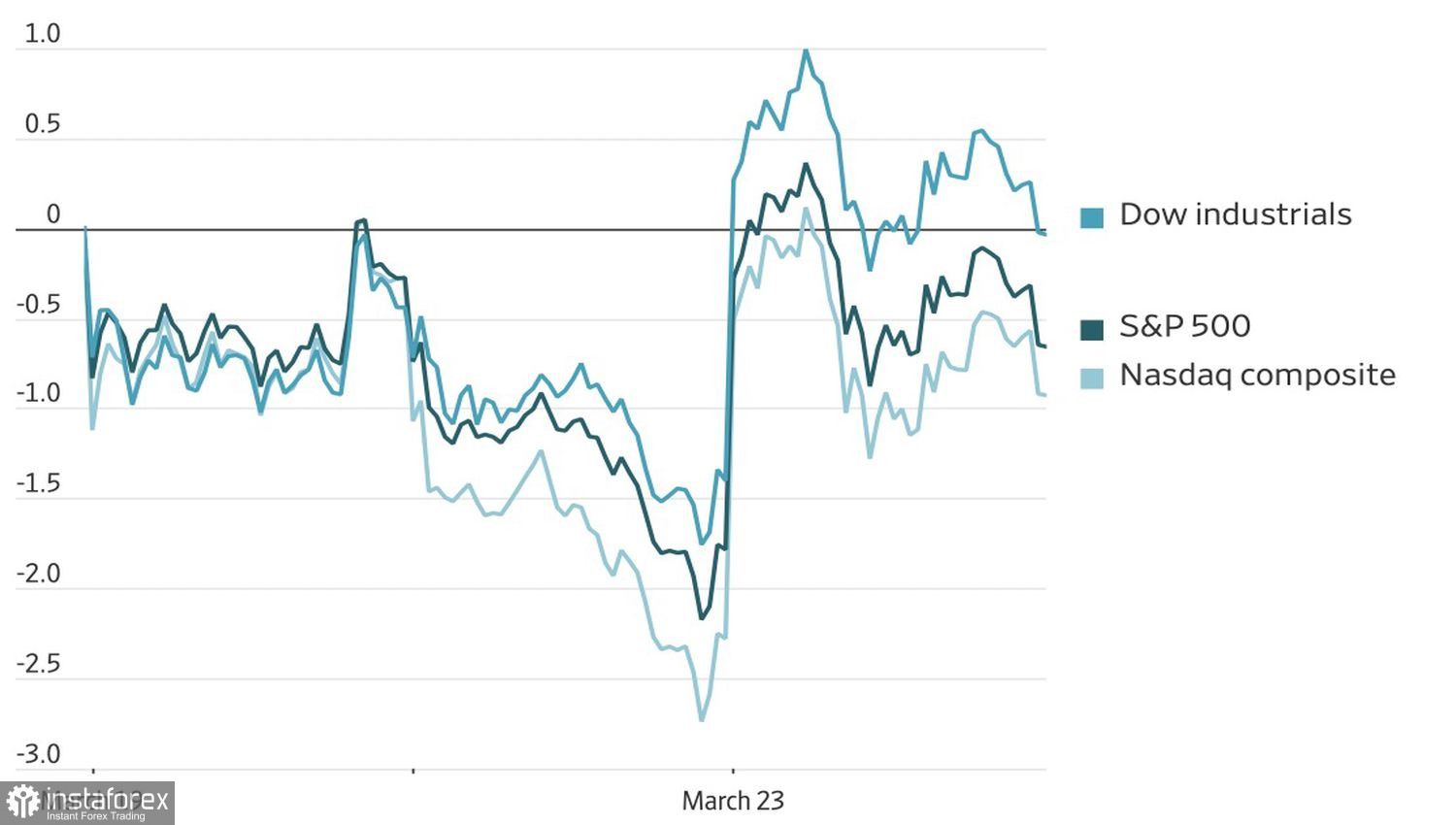
The US equity market played out a real drama. First it fell as Donald Trump's 48-hour ultimatum to Iran expired. Then it rose on news of a five-day ceasefire allegedly resulting from talks between Washington and Tehran. However, by the end of the session, the S&P 500 slipped again on fears that stopping this war will not be as straightforward for the White House as previous confrontations were.
Performance of US equity indices
The market clearly remembers the events of April 2025. The imposition by the United States of its most extensive tariffs since the 1930s knocked the broad equity index down 12% starting from Liberation Day of America. Yet the S&P 500 subsequently jumped 37% by year-end. The result was the TACO trade, which stands for "Trump Always Chinkens Out." Draconian import tariffs were replaced by more or less acceptable measures, global risk appetite recovered, and US equities rallied.
In that context, Tehran's initial denials of any talks were taken by investors with a grain of salt. The logic went that opponents of Donald Trump in the trade war also resisted at first, then were forced to shoulder the tariffs. If even China could be subjected to that fate, what about Iran?
In reality, a country of 92 million is not going to concede to any US president. Time is on Tehran's side. The longer the armed conflict drags on, the higher Brent will climb. The faster Americans will be forced to make concessions. And Iran is demanding compensation for losses. Are the Americans prepared to do that? If not, what talks could there be?
S&P 500 and Russell 2000 performance
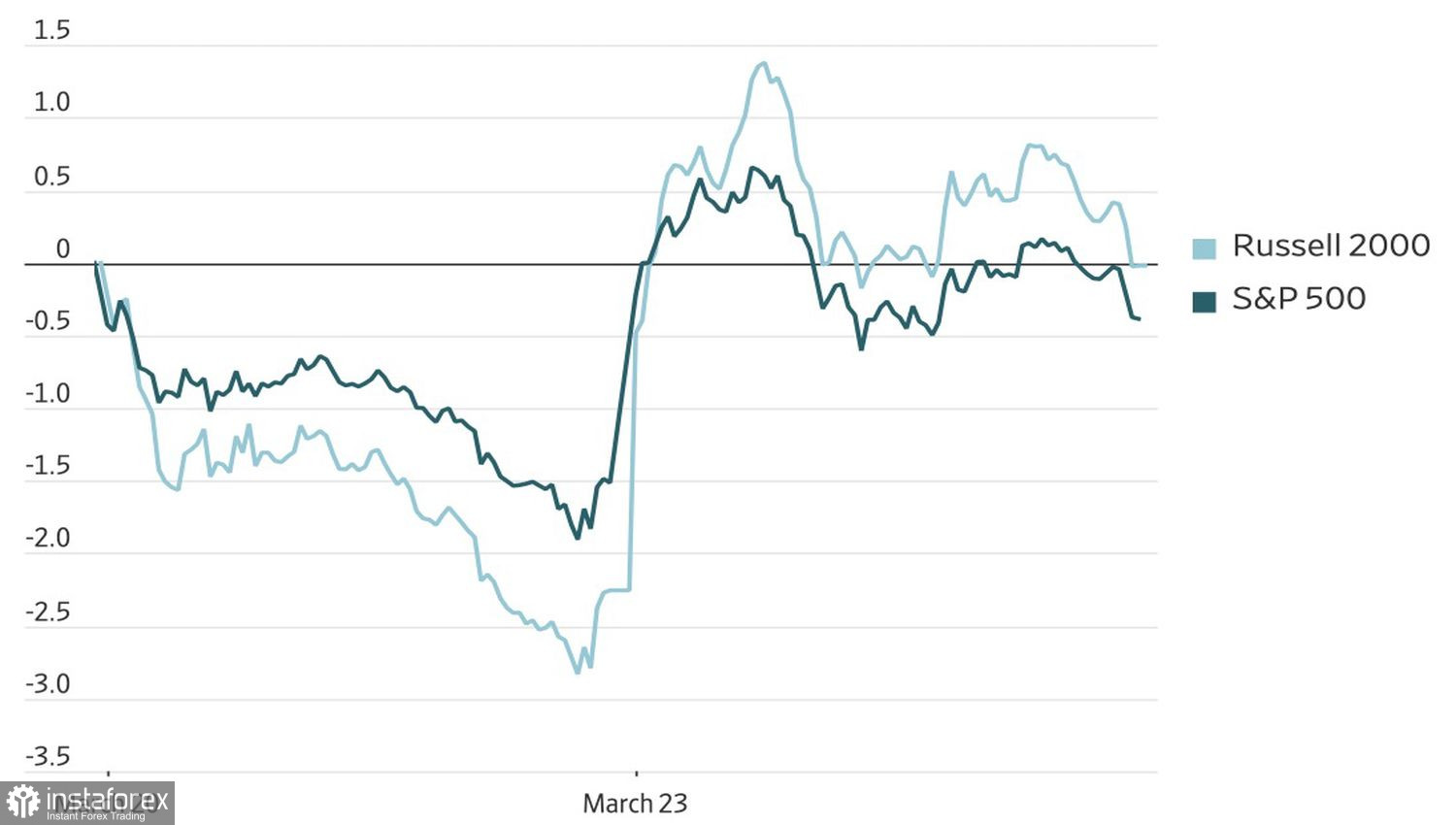
Interestingly, the small-cap Russell 2000 outperformed the S&P 500 on Donald Trump's remarks about dialogue with Tehran. It is more sensitive to the US economic situation than its large-cap peers. That implies that investors have begun to price in a recession into US equity valuations. Goldman Sachs estimates the odds of a downturn within the next 12 months have risen to 30%, citing an oil shock and tighter financial conditions as the main drivers.
Indeed, Chicago Federal Reserve President Austan Goolsbee agreed with the futures market's view that a federal funds rate hike in 2026 is possible. According to him, the situation could evolve along two scenarios: either the central bank resumes an easing cycle, or it moves to tighten monetary policy. Everything will depend on the data. The latter scenario is highly unfavorable for the S&P 500.
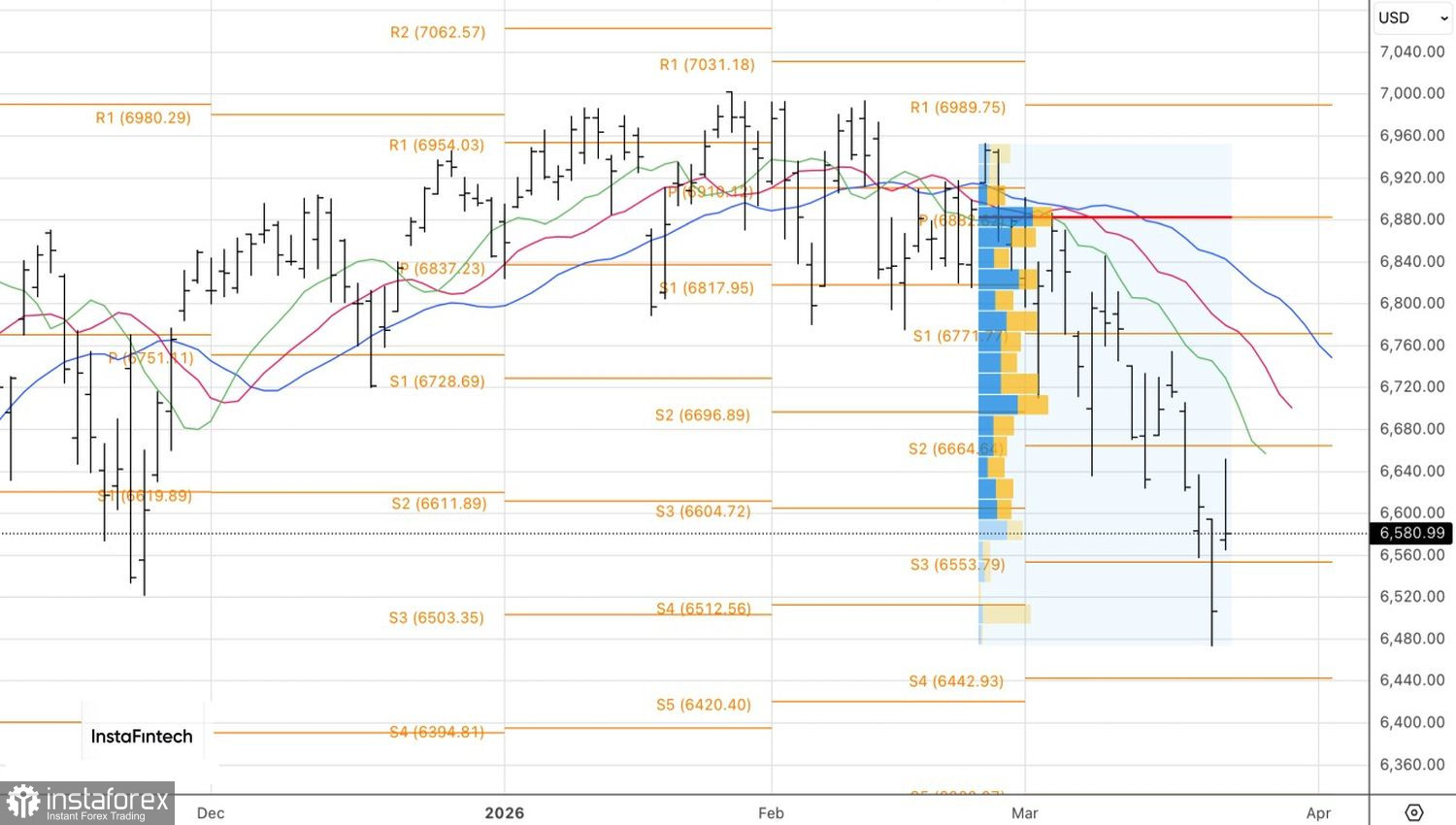
Technically, the daily chart shows that the broad equity index is forming a pin bar with a long upper shadow on a falling market. This signals weakness among bulls and provides a basis for initiating short positions on the S&P 500 on a break of the pin-bar low near 6,565. Given this, it makes sense to use pivot levels at 6,420 and 6,290 as targets for short entries.


