
Lihat juga


 14.04.2026 08:03 PM
The euro is posting gains for the seventh consecutive day, returning to levels seen at the start of the conflict between the United States and Iran. At the time of writing, EUR/USD is trading around 1.1800, reflecting an increase of approximately 0.37% on the day.
The recent rise is driven by improved risk appetite and renewed hopes for the resumption of negotiations between the U.S. and Iran. According to reports, a second round of talks may take place as early as this week after U.S. President Donald Trump announced Iran's readiness to continue discussions.
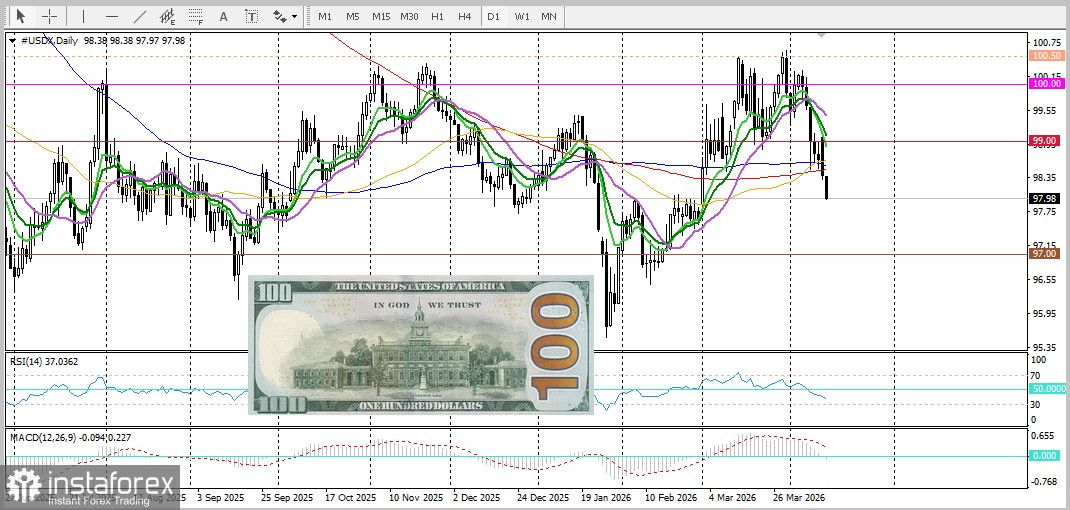
These developments have raised expectations for a possible agreement, which in turn has reduced demand for the U.S. dollar as a safe-haven asset and contributed to a pullback in oil prices from recent highs. The U.S. Dollar Index (DXY), which tracks the dollar against a basket of six major currencies, is trading near the 98.00 level—its lowest since March 2.
Additional pressure on the dollar comes from the latest March PPI data, which came in below analysts' expectations. The headline PPI rose by 0.5% month-over-month, below the forecast of 1.2%, and was unchanged compared to the downwardly revised figure for the previous month, also at 0.5%. On a yearly basis, PPI increased by 4.0%, also below the expected 4.6%.
These figures suggest that, despite the impact of high oil prices reflected in last week's Consumer Price Index (CPI) report, underlying price pressures at the producer level remain relatively contained. This allows the Federal Reserve to remain patient before making adjustments to its policy.
However, oil prices remain elevated, continuing to pose inflation risks and keeping major central banks cautious. Under current conditions, markets are pricing in the possibility of two interest rate hikes by the European Central Bank.
On Monday, ECB President Christine Lagarde stated in an interview with Bloomberg that Europe is not at the center of the impact from the U.S.–Iran conflict and added that the region's economy is developing within the ECB's baseline and adverse scenarios. She confirmed that monetary policy will continue to be data-dependent and emphasized that the ECB is not inclined toward tightening at this stage.
The International Monetary Fund (IMF) has also revised its growth forecasts, now expecting eurozone GDP to grow by 1.1% in 2026 and 1.2% in 2027, down from previous estimates of 1.3% and 1.4%, respectively. For the United States, growth is now projected at 2.3% in 2026, slightly below the previous forecast of 2.4%. The 2027 forecast, however, was revised slightly upward to 2.1% from 2.0%.
From a technical perspective, oscillators remain positive, confirming bullish dominance in the market. The Relative Strength Index is approaching overbought territory, suggesting a possible correction. Therefore, any pullback may present a buying opportunity.


