
Lihat juga


 17.06.2026 05:53 PM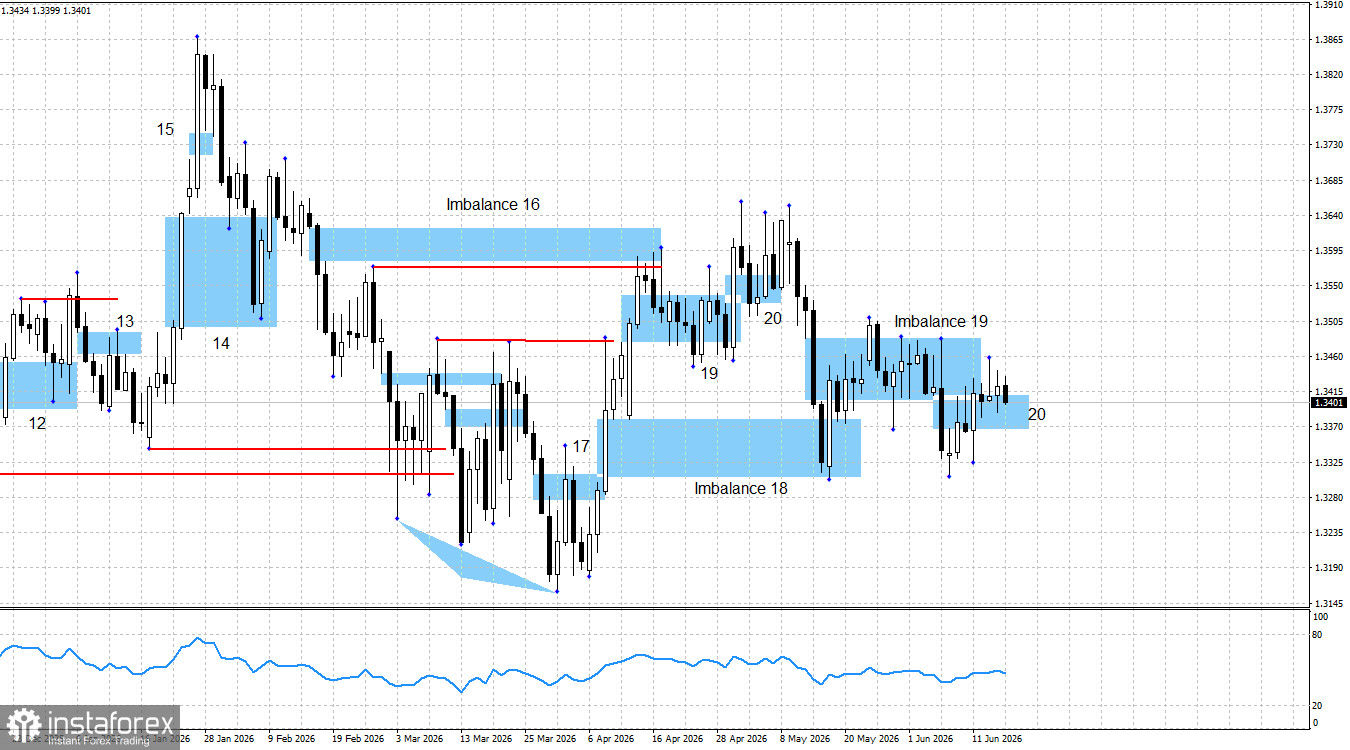
The GBP/USD pair continues its gradual upward movement and has a strong chance this week of invalidating the bearish imbalance 20 and forming a new bullish imbalance. At present, geopolitical developments are supporting bullish traders. However, it should be noted that the pound's advance remains unconvincing and could ultimately result in the formation of a trading range. In fact, sterling has been trading within a sideways channel between 1.3305 and 1.3505 for several weeks. The upward movement remains weak, the bearish pattern has failed to materialize, and no bullish patterns have emerged.
If an agreement between Iran and the United States is signed by the end of the week, it will become much easier for bulls to extend their advance. If not, no meaningful bullish move is likely to occur. Therefore, under current conditions, traders are left waiting for new patterns to form, as there are currently no actionable setups. Tomorrow, the results of the Bank of England meeting will be announced, and they may provide some momentum to a market that has recently become sluggish and directionless.
The first catalyst for traders will arrive this evening, while the second will come tomorrow afternoon. The consensus forecast for the Monetary Policy Committee (MPC) vote suggests two hawkish votes and seven neutral votes. In my view, following the inflation report released this morning, the number of hawkish votes may be lower than expected. If the Bank of England adopts a more neutral and less hawkish tone, this could trigger renewed selling pressure on the pound. However, in my opinion, it is already clear to market participants that with inflation at 2.8%, there is little justification for further monetary tightening.
The situation in the Middle East appears to be moving toward a resolution of the conflict. The US dollar generally performs better during periods of geopolitical tension than either the euro or the pound. Therefore, if a ceasefire is established in the Middle East, both the euro and the pound could receive support. The key question, however, is whether that support will translate into sustained gains.
At present, the market remains cautious regarding reports of a potential agreement. For example, Israel has indicated that its interests have not been fully taken into account, which could potentially lead to renewed tensions in the region. Many traders are also questioning how Washington and Tehran intend to resolve the issue of Iran's nuclear program. A significant number of unresolved issues and potential points of disagreement remain.
In my view, the broader trend remains bullish despite the pair's sharp declines earlier this year. At present, the ceasefire in the Middle East remains in place and may be extended. The Strait of Hormuz remains subject to restrictions from both sides, while the nuclear issue remains unresolved. The situation continues to shift between positive and negative developments. As a result, the market is increasingly uncertain about which reports to trust and is reluctant to take excessive risks.
The technical picture is currently straightforward. All available and active patterns have either played out, been invalidated, or are likely to be invalidated in the near future. I continue to expect a new bullish impulse, which would require the signing of an agreement between Iran and the United States. Therefore, traders should wait for a positive resolution of the Middle East situation and the formation of new trading patterns.
Wednesday's economic calendar was quite eventful, but traders showed little interest even in the important UK inflation report, which indicated no increase in headline inflation in May. Headline inflation remained at 2.8%, while core inflation rose by just 0.1 percentage points. Sterling responded with a decline of only 25 points.
Overall, the broader fundamental backdrop continues to suggest limited long-term upward potential for the US dollar. The conflict between Iran and the United States does little to alter this outlook. Geopolitical tensions temporarily reminded investors of the dollar's safe-haven status, but the overall environment remains less favorable for the US currency.
If the US economy gains stronger momentum in 2026, the Federal Reserve resumes its tightening cycle, and the conflict between the United States and Iran becomes a prolonged geopolitical issue, then the dollar could potentially strengthen toward the 1.3100–1.3000 level in GBP/USD. However, in my view, the long-term outlook for the US dollar could not have changed solely because of one strong Nonfarm Payrolls report, and the Federal Reserve has not yet signaled a readiness to tighten policy further.
News Calendar for the United States and the United Kingdom:
The June 18 economic calendar contains eight events, with the Bank of England meeting and related announcements representing the key focus. Economic data is expected to influence market sentiment throughout Thursday.
GBP/USD Forecast and Trading Tips:
The long-term outlook for the pound remains bullish, while all bearish patterns have either been invalidated or are no longer relevant. Therefore, traders should focus on the formation of new patterns, which will help determine the likely direction of the next move.
Geopolitical developments can push the pound in either direction, and the conflict in the Middle East has not yet been fully resolved. Therefore, opening long positions without clear trading signals remains premature. However, if a formal agreement is signed, the pound has every chance of advancing toward at least the 1.3655 level.


