
Veja também


 28.09.2026 08:11 AM
The week begins with the familiar balance of forces. After Friday, the dollar retained control over the euro and the pound, and both European currencies remain in catch-up mode, needing a substantial catalyst to seize the initiative. The reason is US data, which proved strong before the weekend and restored market confidence in the US economy's resilience. Until that backdrop changes, neither the euro nor the pound looks ready to rise on its own.
Last Friday, the University of Michigan consumer-sentiment index rose to 48.1 in September from 47.8 in August. The indicator reflects how US households assess their financial situation and economic prospects, and consumption makes up the largest share of US GDP. Inflation expectations also remained fairly high and matched economists' forecasts. So even a small gain is read by the market as a sign of steady domestic demand, lowering the likelihood of a dramatic Federal Reserve easing. For the euro and the pound, that means continued pressure.
No releases are expected this morning for the eurozone or the UK. That means the euro and the pound lack their own drivers in the first half of the day. The main event will be another speech by European Central Bank President Christine Lagarde. When data are absent, the market listens closely to central-bank leaders, because traders derive expectations about how long rates will stay high and when cuts might start from their remarks. Last week's decent eurozone data gives Lagarde little reason to soften her tone, and I don't expect her to. That is partly positive for the euro, since hawkish rhetoric brings the prospect of another rate hike closer and higher rates make the currency more attractive. However, do not expect a strong rally: the hawkish tone is already anticipated and largely priced in, so any reaction may be short-lived, and the dollar still stands firm after Friday's prints.
For the pound, the key focus will be Sir David Ramsden's speech as Deputy Governor of the Bank of England for Markets and Banking. Officials in this role typically comment on the persistence of services-sector inflation, wage dynamics and the labor market. I don't expect a clearly hawkish signal — and without that support, the pound will struggle to stand up to the dollar, so I expect pressure on GBP/USD to persist.
Reminder: here I'm looking for continuation moves after price breaks a level.
For the euro, the upside trigger is 1.1386. A confident close above it would open the way to 1.1410 and then 1.1433. That scenario needs momentum, and the only potential catalyst today is Lagarde's speech. If she sounds tougher than expected, the euro could get the push it needs, but I wouldn't bet on that in advance, since the market already expects a hawkish tone. The downside trigger is 1.1362. Its break leads to 1.1335 and 1.1312, and I consider that outcome more realistic if Lagarde sticks to familiar wording and the dollar maintains the initiative.
For the pound, the breakout level above is 1.3258; clearing it targets 1.3284 and then 1.3313. Such upside looks least likely, because I do not expect hawkish signals from Ramsden and there are no other calendar catalysts. The downside reference is 1.3224; a break below it opens the path to 1.3182 and 1.3137. I view this as the primary scenario for the pair since it aligns with the expected pressure on GBP/USD and requires no market surprises.
Now the mean-reversion strategy. It's designed for when price pokes beyond a level, fails to sustain, and then returns back.
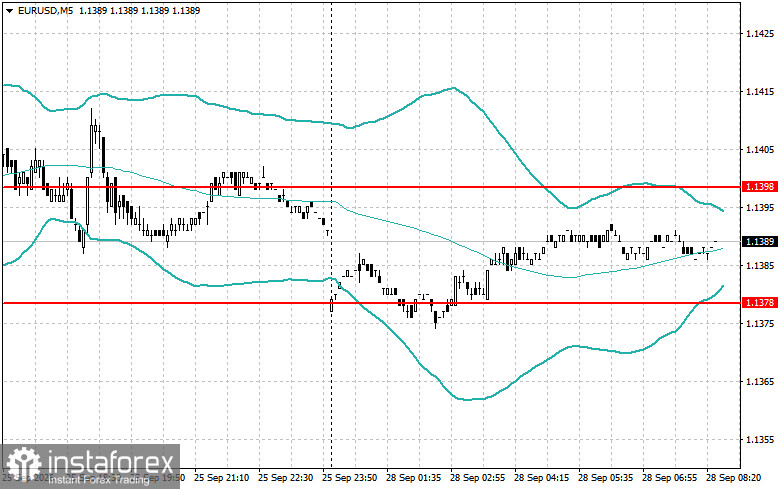
For the euro, the upper boundary is 1.1398, and the lower boundary is 1.1378. The upper level sits 12 pips above the breakout point 1.1386, so price must first pass the buy trigger and only then reach 1.1398. If it gets there but fails to hold and falls back below 1.1398, I consider selling. This is logical when Lagarde's speech is in the expected tone: the initial euro reaction is up, then the market realizes there's no new signal. The lower boundary at 1.1378 lies inside the range between the breakout points 1.1386 and 1.1362, eight pips below the upper trigger. If price pokes 1.1378 to the downside and quickly returns above, I'll look for long positions. But if the decline continues to 1.1362 and below, that becomes a Momentum scenario and a bounce should not be expected.
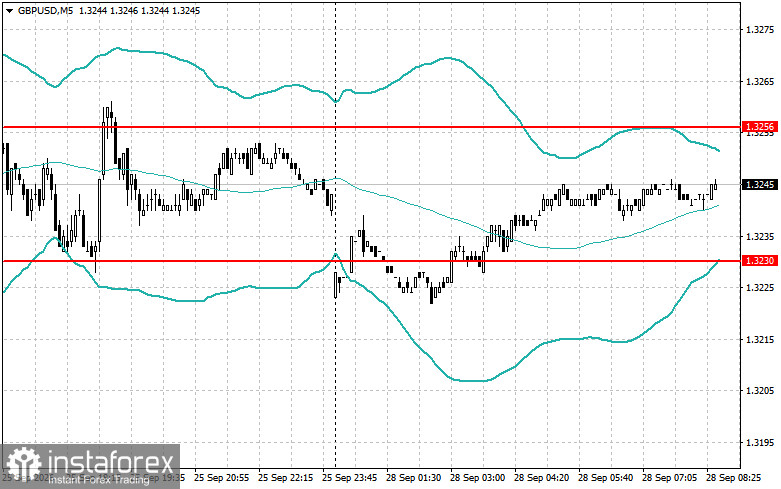
For the pound, the upper boundary is 1.3256, and the lower boundary is 1.3230, both sitting very close to breakout levels, so novices must be especially cautious. The 1.3256 level is only two pips below the buy trigger 1.3258, so one touch is not sufficient to determine the move's character. If price reaches this zone and closes confidently above 1.3258, that is a breakout, and you must not sell there. If it pokes the zone, fails to hold, and quickly returns below 1.3256, the mean-reversion setup applies, and I consider selling. Expected downside pressure on the pound makes this scenario preferable to me, and it's sensible to hide the stop behind the breakout level 1.3258 with a small buffer. The lower boundary at 1.3230 is six pips from the sell trigger 1.3224. I only look to buy there if price pierced 1.3230, did not reach 1.3224, and then returned above—placing the stop under 1.3224. If 1.3224 is broken and price closes below, I abandon the bounce idea. That becomes a breakout-down scenario, which matches the expected background, and buying against it is too risky.


