
Vea también


 10.03.2026 12:41 AM
A week after the onset of the war in the Middle East, the veil begins to lift, and all market participants can see the consequences, leading to very concerning thoughts. Iran has not abandoned its nuclear development, which was clear even before the war started. The only feasible option to achieve the goal is the destruction of all nuclear facilities by ground troops and ground equipment. Only in this scenario can we be sure that Iran no longer possesses nuclear potential. In simpler terms, American military forces would need to "scour" all of Iran, destroying all facilities, stockpiles, and laboratories. Such an operation could require at least several hundred thousand personnel and promises to bring enormous human and equipment losses, as well as substantial costs for the operation itself and for the restoration of military power. It seems that no ground operation was ever planned, and the nuclear conflict is merely another pretext from Donald Trump.
We all remember that the operation in Venezuela was framed as a fight against drug trafficking. After the operation concluded, it suddenly became known that American companies would now control oil in Venezuela. Thus, the operation in Iran may also be related to Trump's desire to take control of oil production and sales.
Firstly, control over oil would give Trump new leverage to pressure and influence other countries. For example, China is almost the sole purchaser of Iranian oil due to global sanctions against Tehran. Therefore, if Trump were to control production in Iran, he would use this card against Beijing.
Secondly, the logistics of oil and other fuels in the Middle East are currently significantly complicated or simply blocked. Who suffers from this the most? China and the Eurozone. These are two significant blocs that Trump considers adversaries of the U.S. Therefore, halting oil shipments from the Middle East hits U.S. competitors, which is also very beneficial for Washington.
For China, the oil issue is critical. The Chinese economy is geared for massive production and further export. Rising oil prices will affect costs, and some Chinese products will lose their competitiveness in global markets. Companies will have to cut production or close down, which will negatively impact the economy. A shortage of oil may also lead to lower production volumes and lower GDP growth rates. Thus, Trump is trying to kill several birds with one stone: striking key adversaries, selling more oil and gas, establishing control over Iran, and once again positioning himself as a peacemaker and savior of the world.
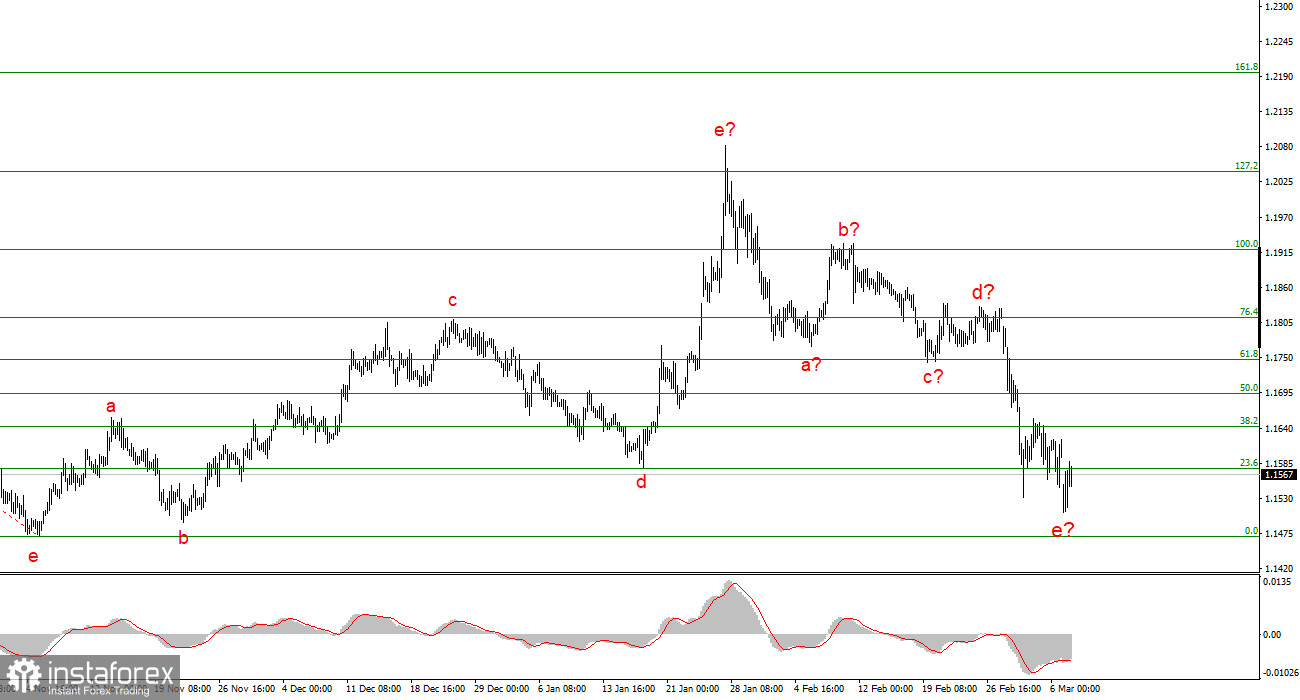
Based on the analysis of EUR/USD, I conclude that the instrument is continuing to build an upward trend. Trump's policies and the Federal Reserve's monetary policy remain significant factors in the long-term decline of the U.S. currency. Targets for the current trend section may extend up to the 25th figure. At this moment, I believe the instrument remains within the framework of global wave 5, so I expect prices to increase in the first half of 2026. The corrective structure a-b-c-d-e could be completed at any moment, as it has already taken a convincing form. I believe it is prudent to look for areas and levels for new purchases, with targets around 1.2195 and 1.2367, corresponding to the 161.8% and 200.0% Fibonacci.
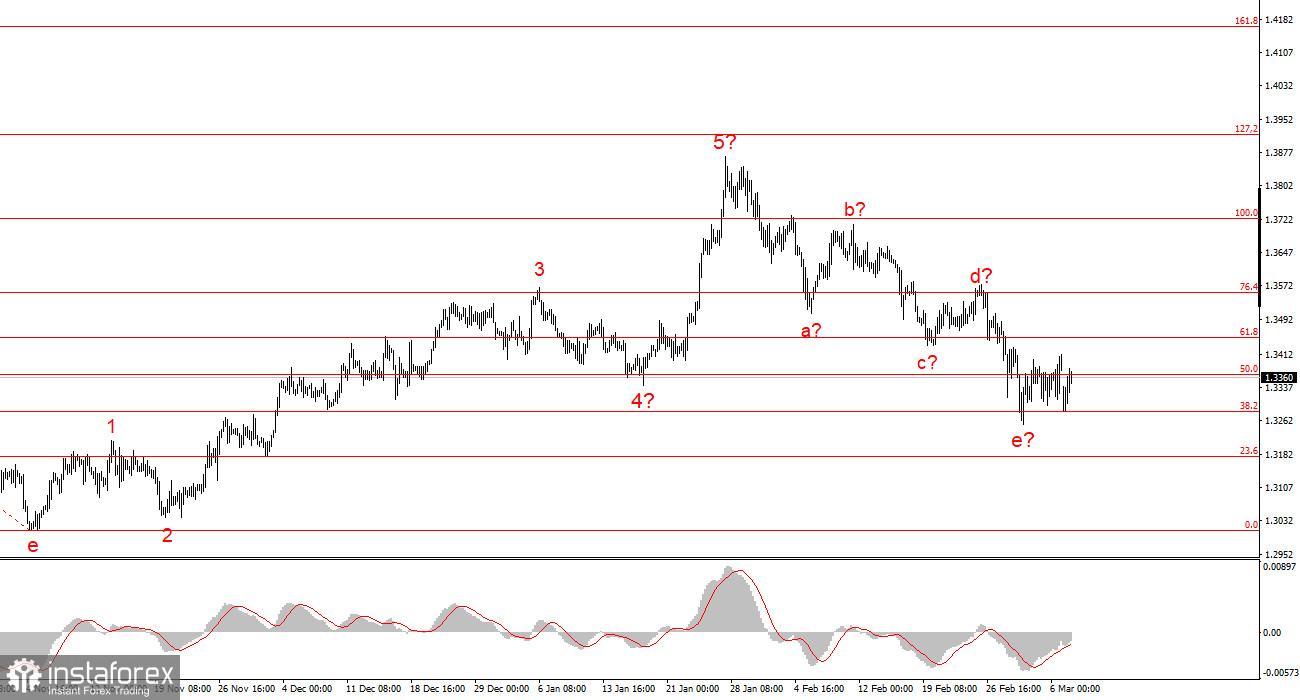
The wave pattern for the GBP/USD instrument appears quite clear. The global wave 5 may take on a much more extended form than it currently has. I believe the corrective wave structure can be completed soon, after which the upward trend will resume. Therefore, I recommend looking for opportunities for new purchases with targets positioned above the 39 figure. In my opinion, under Trump, the British pound has every chance of rising to $1.45-$1.50, and the upward trend does not appear to be over.


