
Vea también


 28.04.2026 01:39 PM
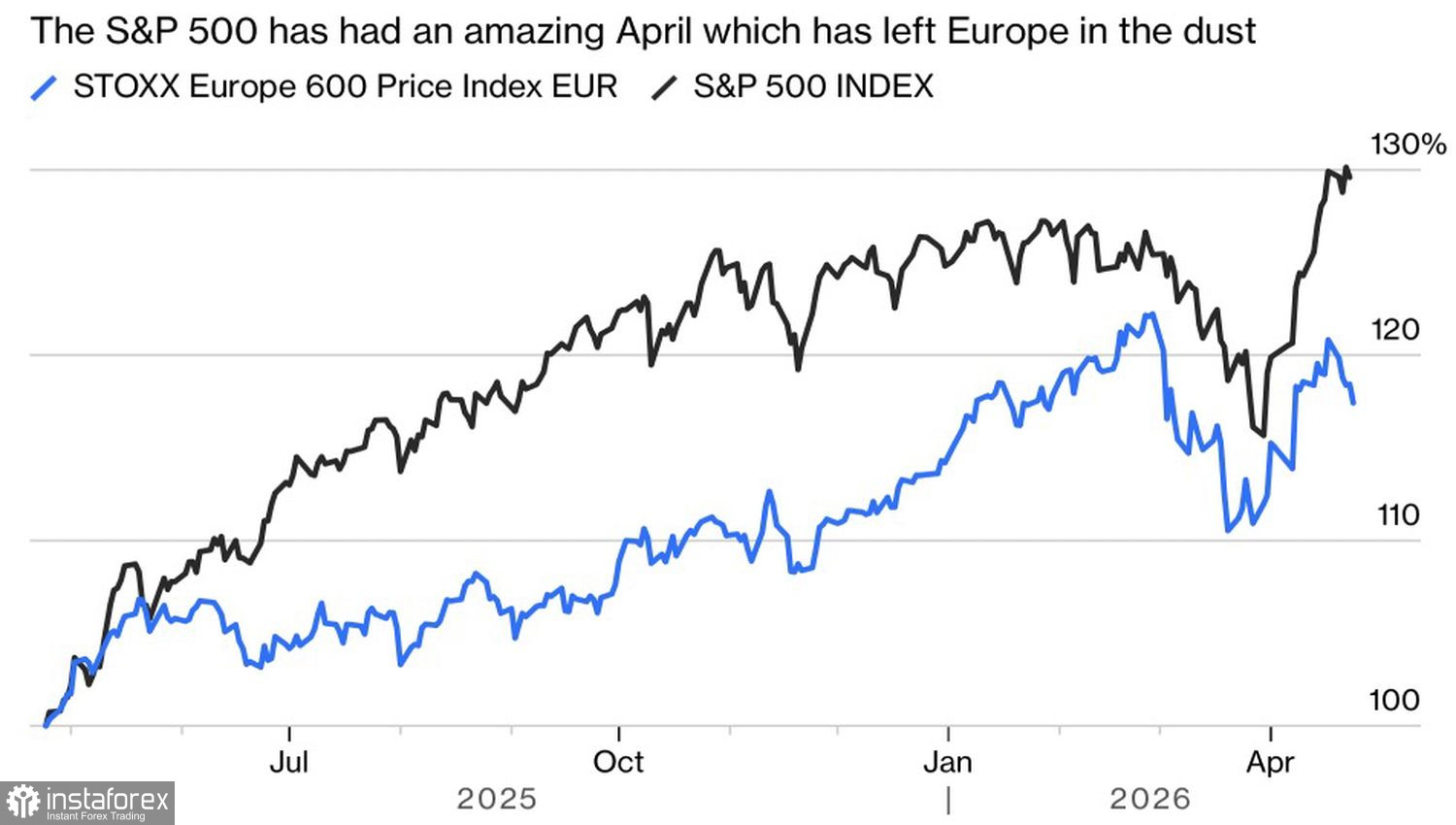
While the euro oscillates between rising oil and equity markets, capital flows are clearly pointing the way for EUR/USD. European stock markets are being decisively outperformed by their US peers. If the ECB does not deliver two to three tightening moves in 2026, sovereign yields in the Old Continent risk falling significantly, reducing their attractiveness and accelerating capital flight.
European equities began 2026 on a positive note. Low valuations, prospects for an acceleration in eurozone growth, uncertainty around Donald Trump's policies, and a sell?off in AI stocks in the US gave Europe a favorable relative story versus American indices.
Performance of US and European equity indices
The Middle East conflict flipped that script. Instead of accelerating, the European economy now appears to be fighting for survival. Risks of a repeat of the energy shock from four years ago are looming. The longer the Strait of Hormuz remains blocked, the greater those risks — and US and Iranian proposals for reopening the key oil artery remain mutually unacceptable.
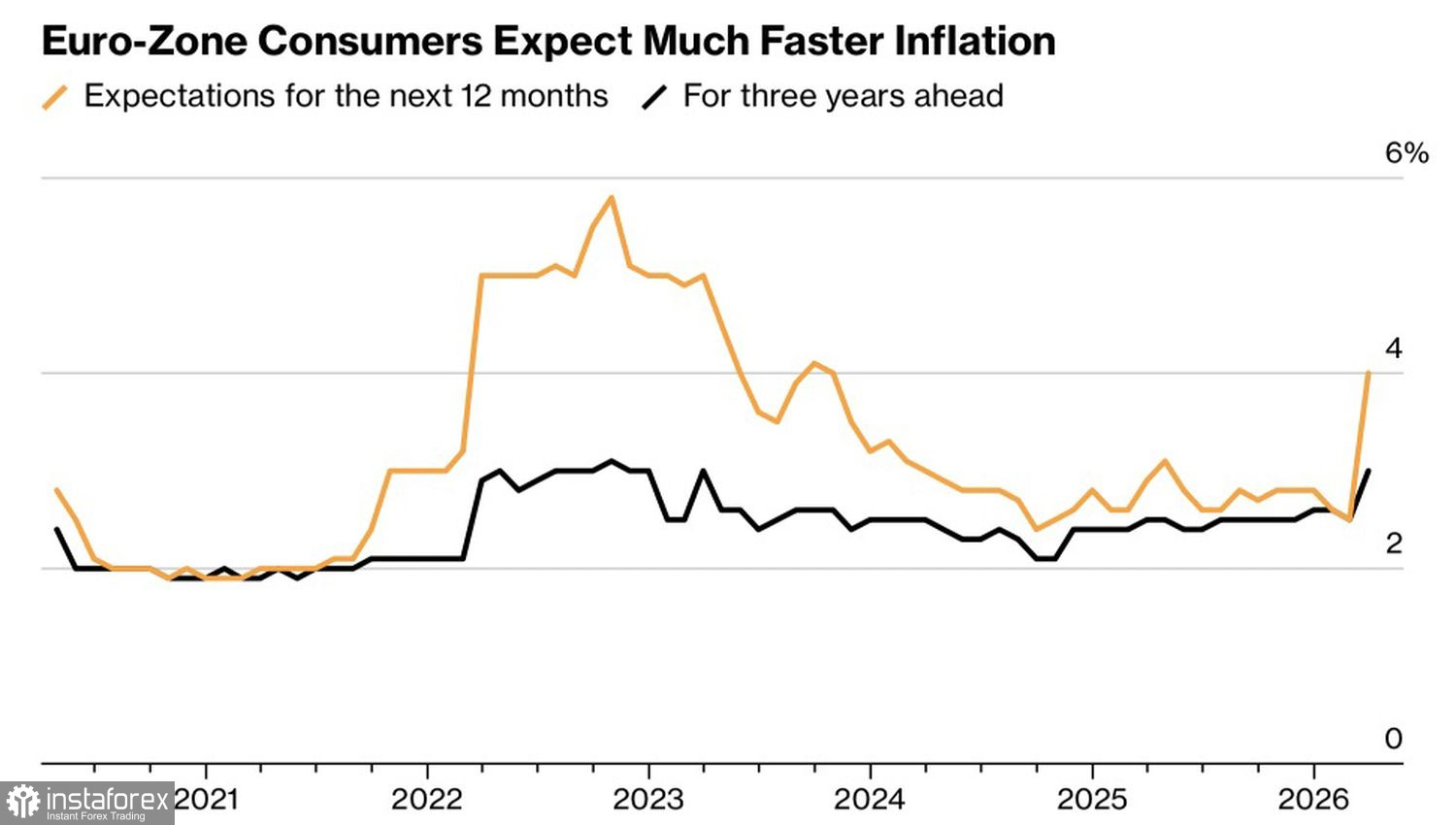
Futures markets still anticipate two ECB tightening moves in 2026, with a non-zero chance of a third. Those odds are supported by the rise in consumer inflation expectations in the eurozone over the next 12 months (from 2.5% to 4%), over three years (from 2.5% to 3%), and over five years (from 2.3% to 2.4%).
Dynamics of eurozone inflation expectations
Bloomberg consensus sees only one ECB deposit-rate hike in 2026 — in June — and expects the rate to return toward 2% next year as the bloc's economy slows. If the futures market is wrong, German yields could fall, and their appeal would decline, triggering capital flows from Europe to the US and putting downward pressure on EUR/USD.
So a weak economy must eventually show up in the currency. That said, investors currently hope for a quick end to the Middle East conflict and have been willing to sell the US dollar as a safe haven while US equity indices continue to hit record highs. Those forces have so far limited EUR/USD's decline.
Conversely, a prolonged closure of the Strait of Hormuz would likely push oil even higher. In that scenario, currencies of net energy exporters typically gain — and the US dollar would be no exception.
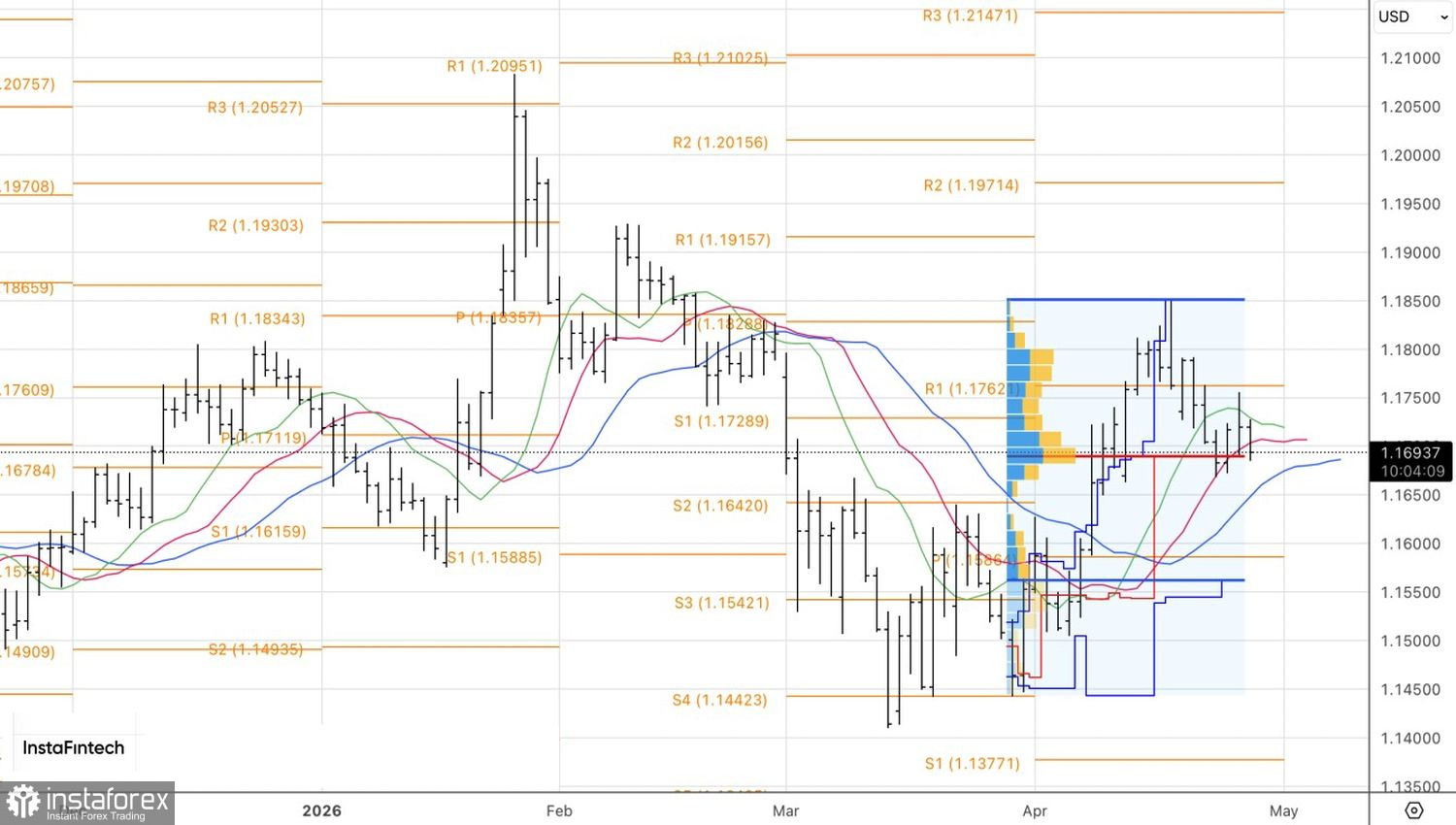
Technically, EUR/USD failed to test resistance at the green moving average on the daily chart and returned to fair value around 1.169. A decisive break below that level would increase the odds of further downside and justify initiating short positions in the euro against the US dollar.


