
See also


 06.02.2026 10:26 AM
the day found itself in the support level of 1.3526–1.3539. A rebound from this zone allows for expectations of a reversal in favor of the pound and some growth toward the 1.3611–1.3620 level. However, the trend has already shifted to "bearish." A rebound of the pair from the 1.3595–1.3620 level would favor the U.S. dollar and a resumption of the decline toward the support level of 1.3437–1.3470.
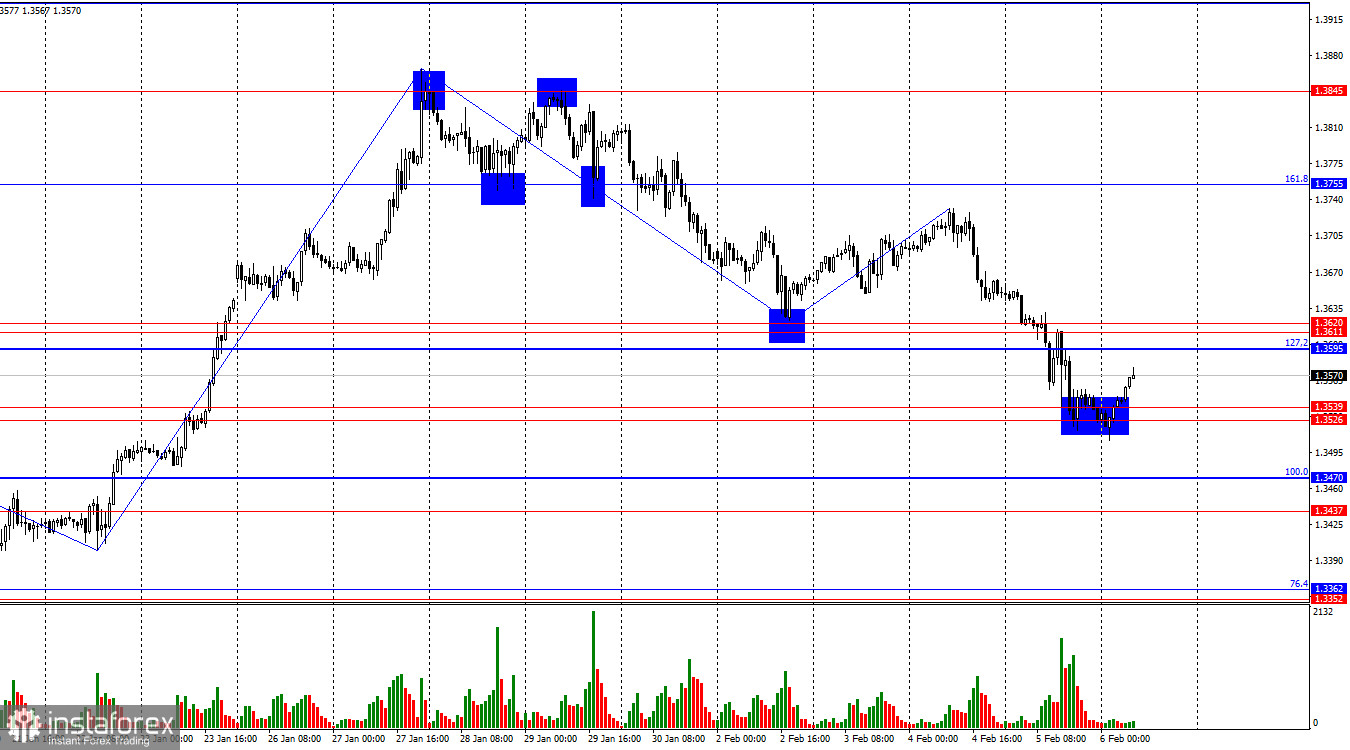
The wave situation has changed to "bearish." The last completed upward wave failed to break the previous peak, while the new downward wave broke the previous low. We have seen two consecutive "bearish" waves, which is sufficient for a trend change. The information background for the pound has been weak in recent months, but the information background in America is even worse. Bulls are regularly supported by Donald Trump. At present, bears and bulls dominate alternately.
The information background on Thursday could have been positive for the pound, as no one in the market believed in monetary policy easing by the Bank of England. Overall, traders turned out to be right—the rate was left unchanged. However, it became clear that the MPC committee adopted this decision with great difficulty. Four members of the Board voted in favor of easing, which immediately generated doubts in the market about the Bank of England's determination to bring inflation under control. I remind you that the latest inflation report for December announced an acceleration to 3.4% y/y. Thus, no one in the market expected "dovish" pressure within the Board of Governors. Now traders will have to figure out what is happening in the "British kingdom." Andrew Bailey said at the press conference that the British economy started 2026 quite well, and that inflation continues to slow in the medium term. However, official figures say something slightly different. GDP is still growing rather weakly, and inflation is accelerating rather than slowing. Or at least remains at a consistently high level. Thus, the pound received a blow yesterday that it did not deserve. But traders reacted fairly to the inappropriate "dovish" stance of the Bank of England.
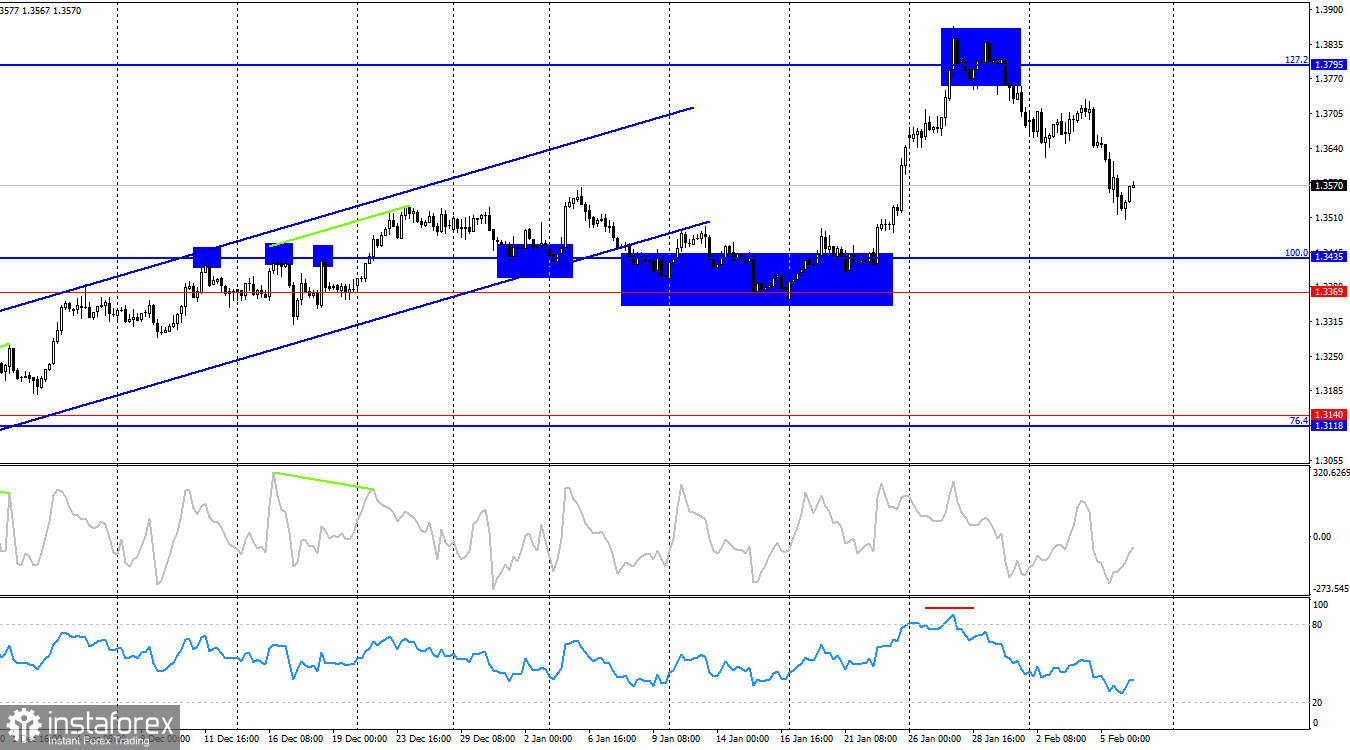
On the 4-hour chart, the pair completed a rise to the Fibonacci level of 127.2% – 1.3795 and rebounded from it. Thus, a reversal in favor of the U.S. dollar followed, and a decline toward the support level of 1.3369–1.3435 began. Consolidation of the pair above the 1.3795 level would allow expectations of a continuation of the "bullish" trend toward the 1.4020 level. No emerging divergences are observed today.
Commitments of Traders (COT) report:
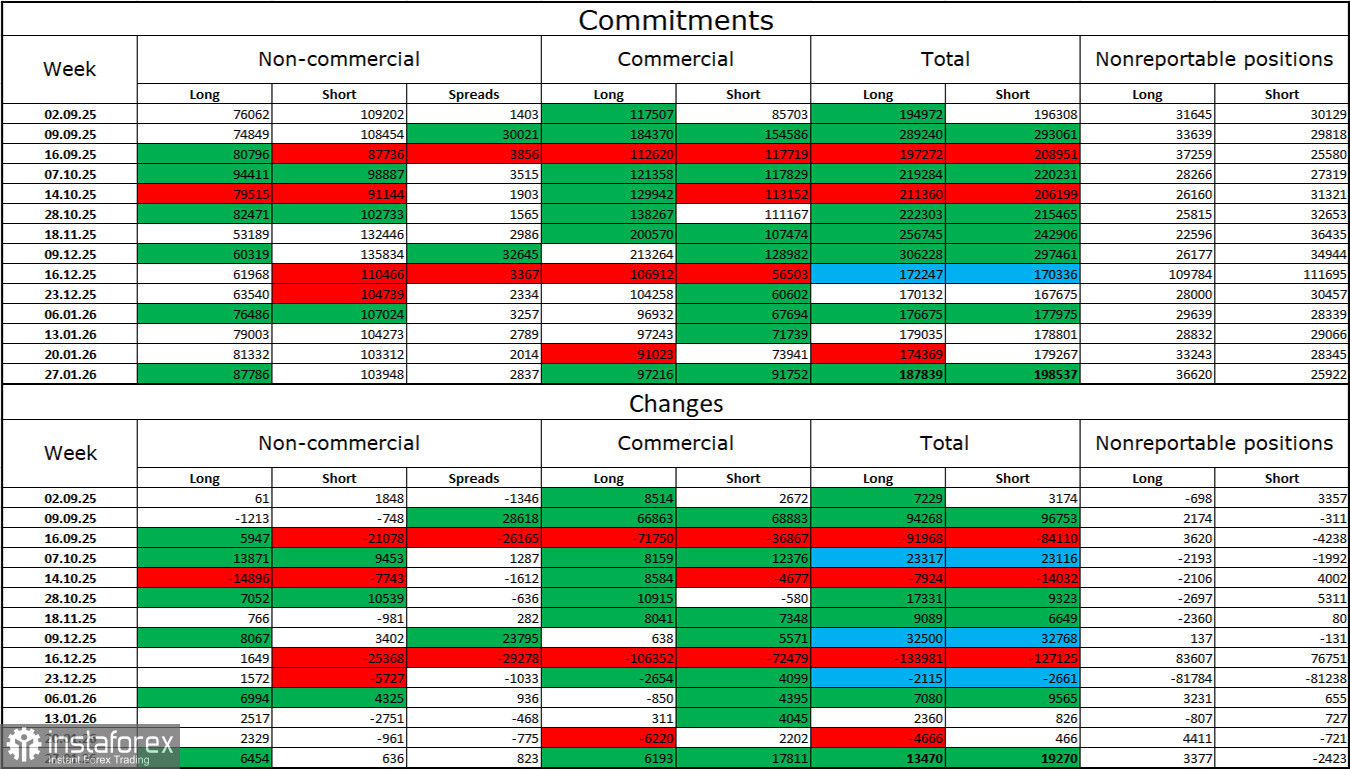
The sentiment of the "Non-commercial" category of traders became more "bullish" over the last reporting week. The number of long positions held by speculators increased by 6,454, while the number of short positions increased by only 636. The gap between the number of long and short positions is now effectively as follows: 87 thousand versus 104 thousand, and it is shrinking rapidly. Bears have dominated in recent months, but it seems they have exhausted their potential. At the same time, the situation with contracts on the euro currency is exactly the opposite. I still do not believe in a "bearish" trend for the pound.
In my view, the pound still looks less "dangerous" than the dollar. In the short term, the U.S. currency may occasionally enjoy demand in the market. But not in the long term. Donald Trump's policies have led to a sharp decline in the labor market, and the Fed is forced to ease monetary policy to stop the rise in unemployment and stimulate the creation of new jobs. U.S. military aggression also does not add optimism for dollar bulls.
News calendar for the U.S. and the UK:
USA – University of Michigan Consumer Sentiment Index (15:00 UTC).
On February 6, the economic events calendar contains only one entry. The impact of the information background on market sentiment on Friday may be weak and only in the evening.
GBP/USD forecast and advice to traders:
Sales of the pair today were made upon a close below the 1.3595–1.3620 level on the hourly chart with targets at 1.3526–1.3539 and 1.3470. The first target was reached. New sales are recommended upon a close below 1.3526–1.3539 or in the event of a rebound from 1.3595–1.3620. Buy positions could be opened upon a rebound from the 1.3526–1.3539 level on the hourly chart with a target of 1.3595–1.3620.
Fibonacci grids are constructed based on 1.3470–1.3010 on the hourly chart and on 1.3431–1.2104 on the 4-hour chart.


