
यह भी देखें


 04.03.2026 10:48 AM
On the hourly chart, the GBP/USD pair continued its decline on Tuesday and consolidated below the 1.3341–1.3352 support level based on the new Fibonacci grid. Thus, the downward movement may continue toward the 1.3199–1.3214 support level. A consolidation above the 1.3341–1.3352 level would work in favor of the British pound and allow for some growth toward the 1.3437–1.3465 resistance level.
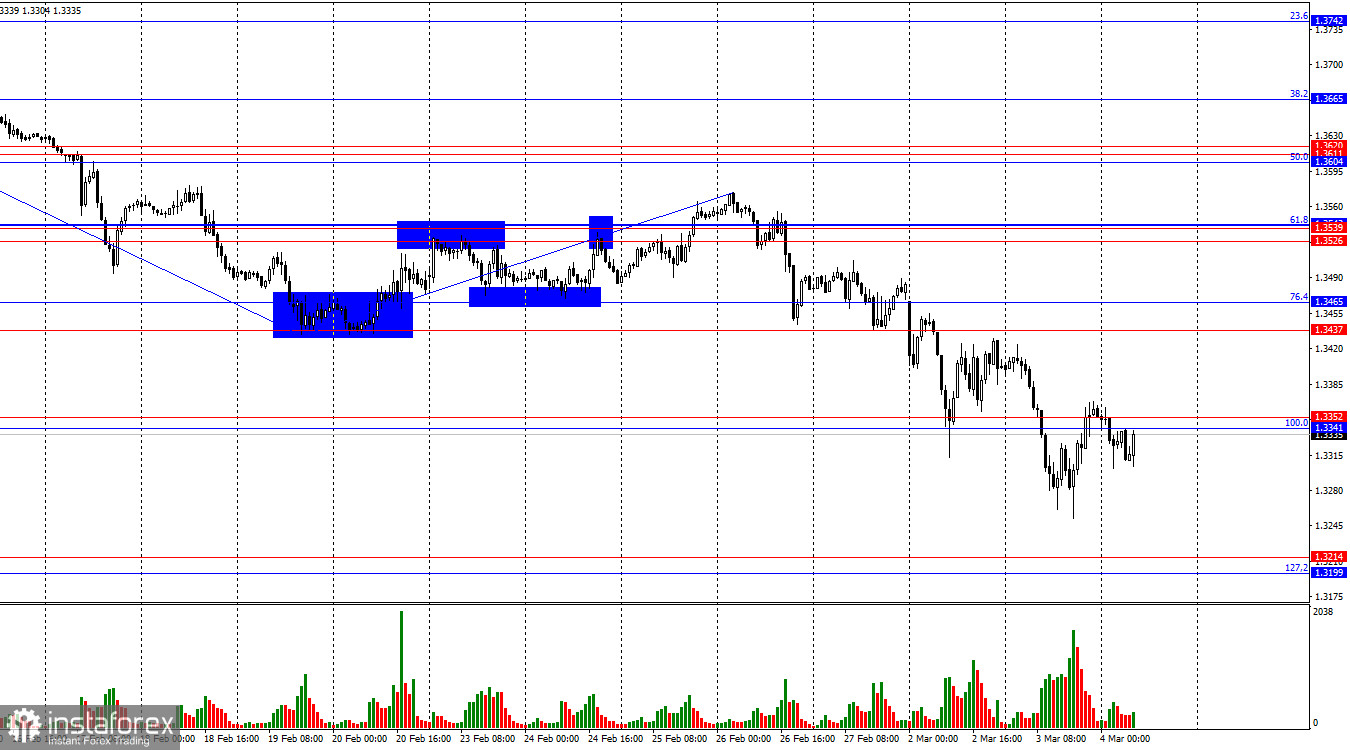
The wave structure remains "bearish." The last completed upward wave failed to break the previous peak, while the new downward wave broke the previous low. To shift the trend to "bullish," a consolidation above the last peak at 1.3573 is required, or two consecutive bullish waves — which is unlikely in the near future. The news background for the pound has been weak in recent months, while geopolitics gives the bears a full advantage in the market.
Tuesday's news background was light, and traders remained focused on the war in Iran and its consequences for the global economy. The euro and the pound are falling almost in sync, demonstrating their weakness in times of crisis. Several mechanisms are currently at work simultaneously. The US dollar is in demand as a safe-haven asset amid a serious geopolitical conflict. Demand for the euro is declining (or remaining unchanged), as it is not considered a "safe haven." The British pound may be falling alongside the euro, as their correlation has traditionally been high. In February, nearly all UK reports brought the Bank of England closer to monetary policy easing at its next meeting, which contributed to the pound's decline. However, in early March, amid growing risks of rising inflation due to the global energy crisis, the market began to abandon expectations of an immediate rate cut in the UK. Nevertheless, this factor is not providing significant support to the pound. It is falling just like the euro. In my view, the chart picture combined with the war in Iran is currently the primary driver.
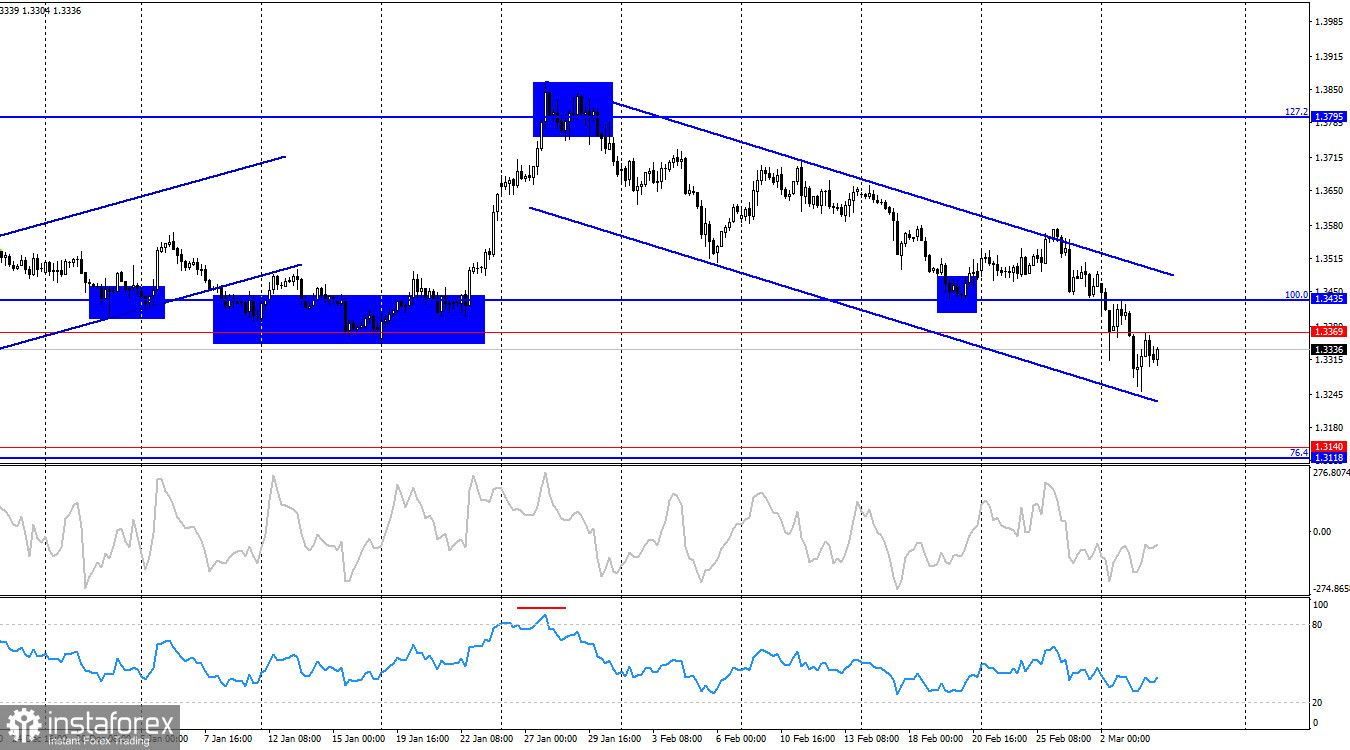
On the 4-hour chart, the pair rebounded from the upper boundary of the downward trend channel, reversed in favor of the US dollar, and closed below the 1.3369–1.3435 support level. Thus, the decline may now continue toward the 1.3118–1.3140 level. A close above the downward channel would suggest the end of the bearish trend. No emerging divergences are currently observed on any indicator.
Commitments of Traders (COT) Report:
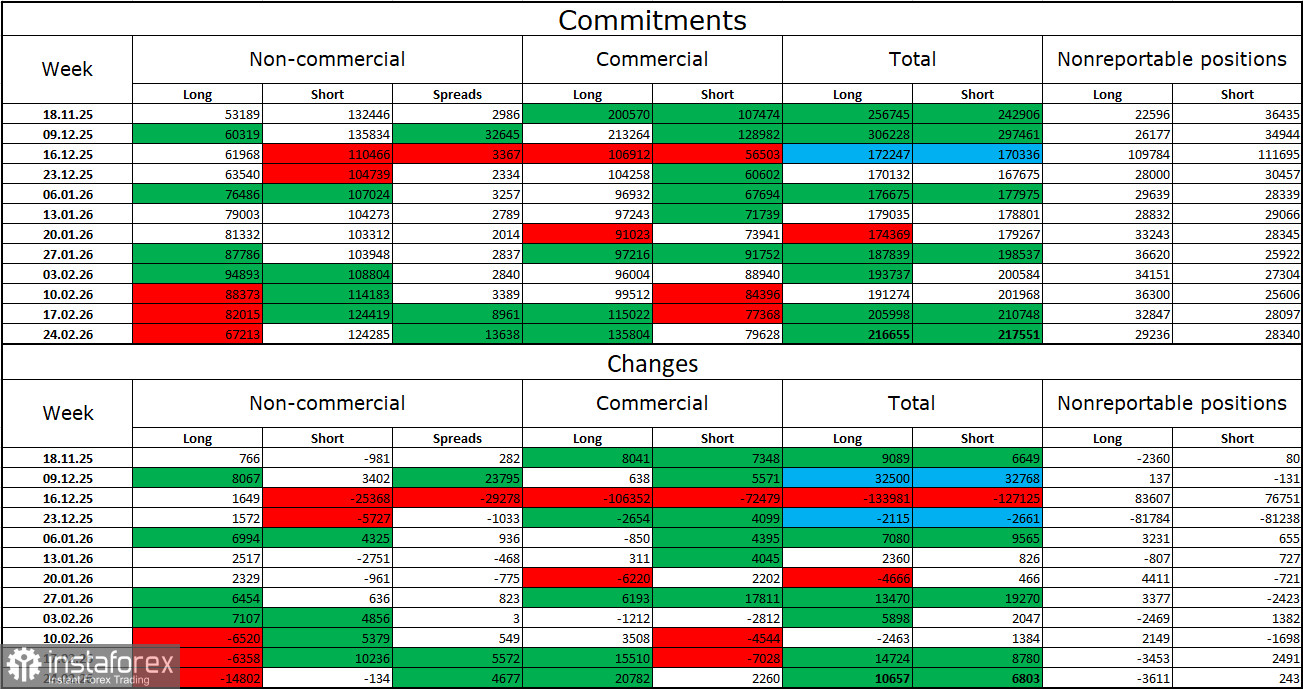
The sentiment of the "Non-commercial" category of traders became more bearish over the latest reporting week, which under current circumstances no longer seems accidental. The number of long positions held by speculators decreased by 14,802, while short positions decreased by 134. The gap between long and short positions is now effectively 67,000 versus 124,000. In recent months, bears have more often dominated, although the situation with euro contracts is directly opposite. I still do not believe in a sustained bearish trend for the pound, but now everything will depend not on economic indicators or Trump's trade policy, but on the duration and scale of the war in the Middle East.
Over the past year, the pound looked like a safer currency compared to the dollar — more stable and with a clearer economic outlook. However, in recent months, a correction began while the bullish trend remained intact, and then the conflict in the Middle East started escalating almost daily. Negotiations on an agreement between the United States and Iran failed, so now the dollar is strengthening due to geopolitics. How long the dollar will continue to rise depends on developments in the Middle East.
News Calendar for the US and the UK:
On March 4, the economic calendar contains two entries, but the market may remain focused more on geopolitics than on economic data. The influence of the news background on market sentiment will be present on Wednesday.
GBP/USD Forecast and Trading Tips:
Selling the pair is possible after a rebound on the hourly chart from the 1.3341–1.3352 level, with a target of 1.3199–1.3214. Buying can be considered if the pair closes on the hourly chart above the 1.3341–1.3352 level, with a target of 1.3437–1.3465.
The Fibonacci levels are drawn from 1.3341–1.3866 on the hourly chart and from 1.3431–1.2104 on the 4-hour chart.

