
यह भी देखें


 16.03.2026 03:49 PM
Donald Trump claims that Iran wants to strike a deal with the United States. However, Tehran immediately denies this information and, as a demonstration, begins bombing neighboring countries. The escalation of the geopolitical conflict is evident. Yet, instead of continuing to fall, EUR/USD begins to rise. Has the euro grown weary of its own weakness?
In fact, there are several reasons why the major currency pair may see retracements or consolidation. Investors are comparing the conflict in the Middle East to the events four years ago, when hostilities reached Ukrainian territory. Nevertheless, Credit Agricole finds several significant differences. First, this time the confrontation is global in scope. It threatens not only the European but the global economy as well. On that basis, the plunge of EUR/USD in March may seem excessively fast.
Reaction of G10 currencies to Middle East conflict
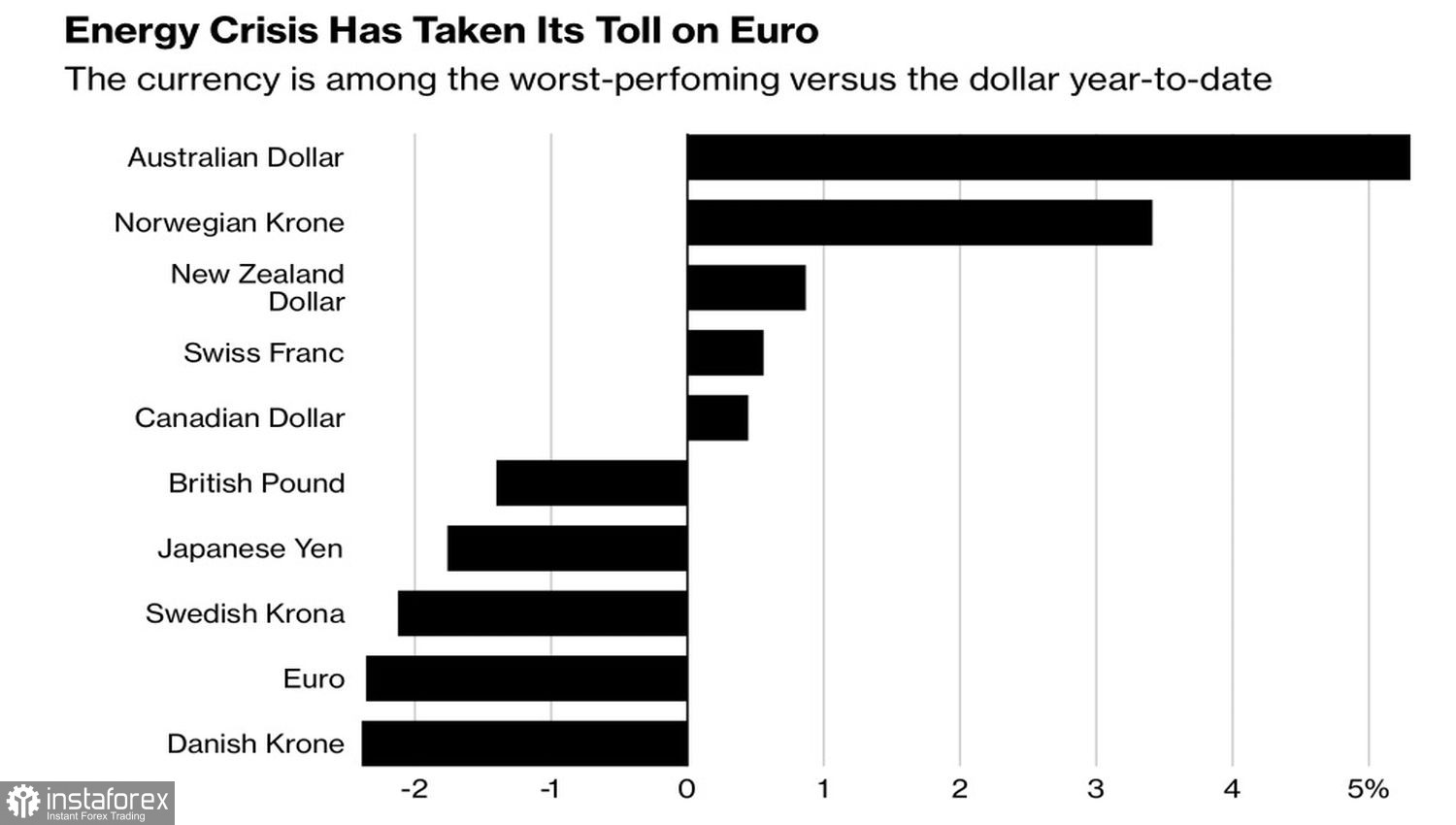
Second, a fall in the euro below parity, as in 2022, is unlikely. At that time, gas prices shot above €300 per megawatt-hour. Now, they are fluctuating between €50 and €60. Moreover, the European Central Bank was far behind the Federal Reserve four years ago. When Washington began aggressively raising rates, Frankfurt was deliberating whether it should do the same.
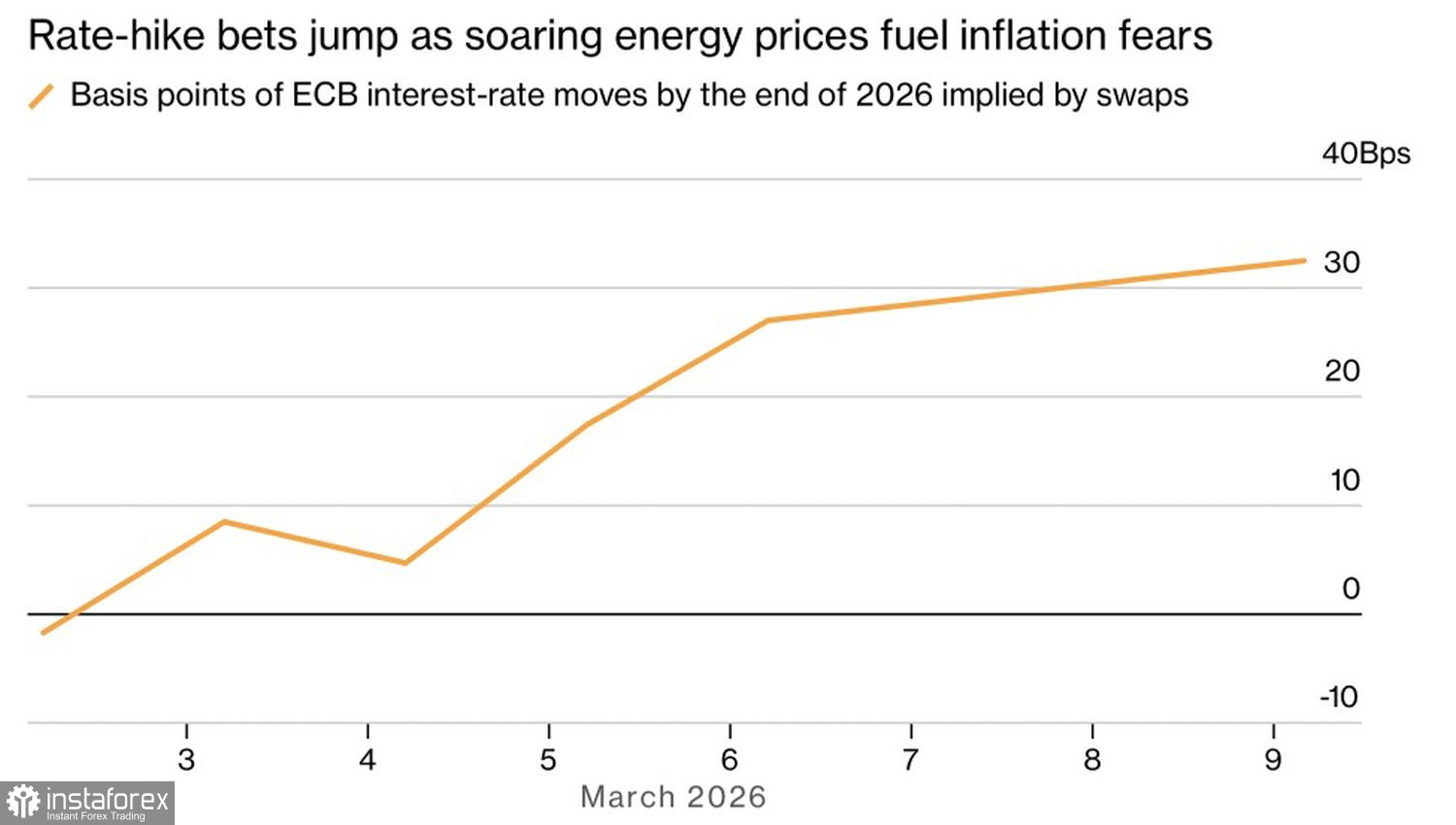
Today, the story is entirely different. The futures market is pricing in a prolonged pause in the cycle of monetary tightening by the Federal Reserve and two hikes by the European Central Bank to the deposit rate in 2026, from 2% to 2.5%.
Dynamics of market expectations for ECB rate
Third, there have not yet been large-scale selloffs of European bonds as there were four years ago. Then the energy crisis and fears for the eurozone economy forced investors to flee the currency bloc's debt market. Capital outflows put pressure on EUR/USD. Currently, there is nothing of the sort.
I would add one more factor — the world economy is less dependent on oil. If crises in the oil market in the 1970s and in 2007–2008 triggered a global recession, the chances of such a scenario repeating now are small. Before the armed conflict in the Middle East, Brent had been in the iron grip of the bears. Once the confrontation ends, the North Sea grade will move downward.
Goldman Sachs's shock scenario of oil surging above $147.5 per barrel looks unlikely. If that is the case, a relatively modest rise in gas prices compared with 2022 will be a lifesaver for the eurozone economy and its currency — the euro. A fall in EUR/USD to 1.1 and below is questionable. Nevertheless, anything can happen in Forex. Never say never.
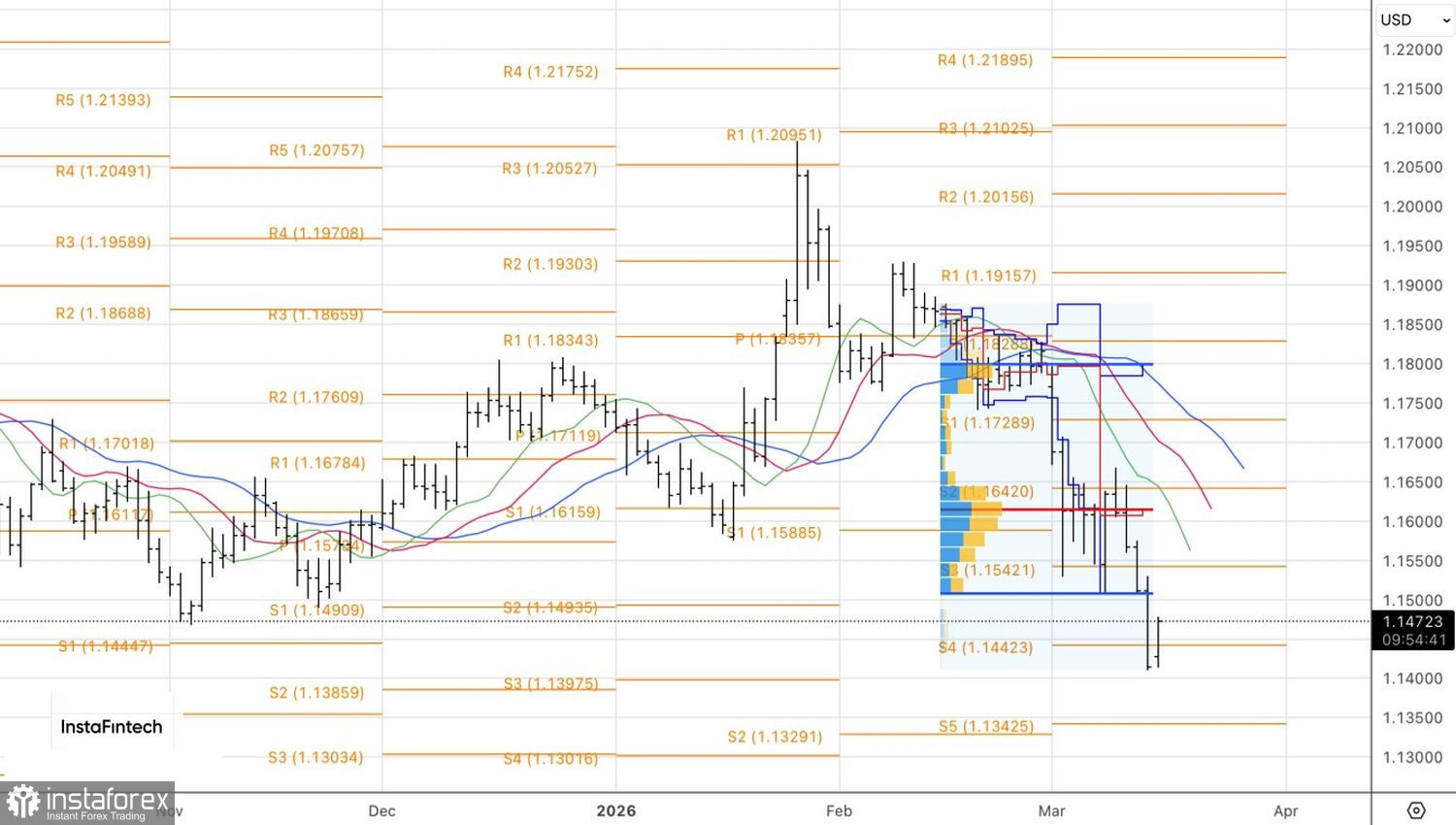
Technically, on the daily chart of the major currency pair, there has been a rebound from the pivot level of 1.1445. Bulls have gone on the counterattack. However, market sentiment remains bearish. Therefore, rebounds off resistances at 1.1505 and 1.154 should be used to form short positions on EUR/USD. As the euro should return below support at $1.445.

