
See also


 04.05.2026 12:49 AM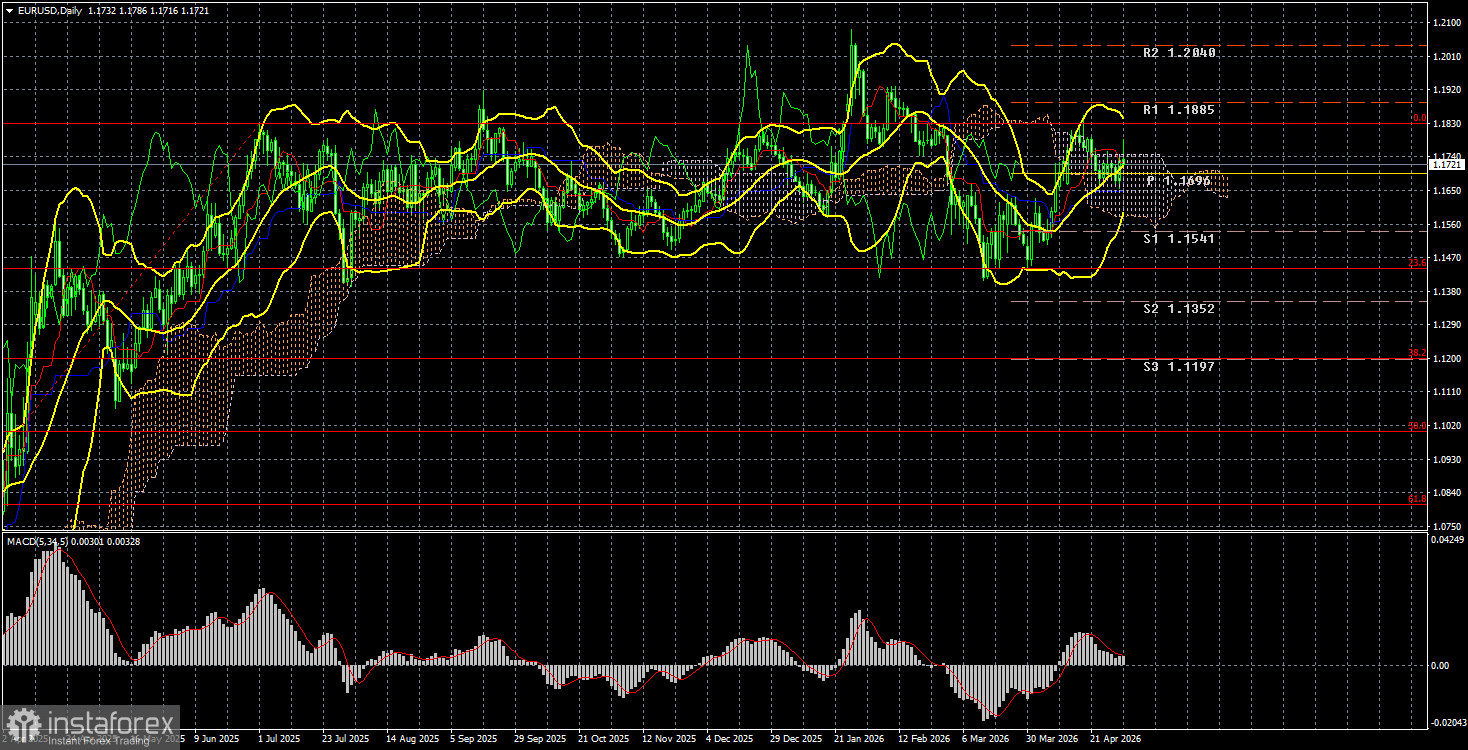
The EUR/USD currency pair traded without much momentum last week. Many traders likely expected more significant movements, especially given the influx of news, particularly in the second half of the week. Recall that from Wednesday to Friday, all three central banks held meetings, and a wealth of important macroeconomic data were published, alongside new geopolitical news as the week came to a close. Therefore, traders clearly had no shortage of information.
However, such an abundance of various important data played a trick on the market. Firstly, traders were unable to consolidate all the received facts. Secondly, market attention remains largely focused on the Middle East. Thirdly (and this point does not negate the second), the influence of geopolitics continues to weaken, with no concrete shifts in either direction. Simply put, the situation in the Middle East remains tense but unchanged. There are no official negotiations between Tehran and Washington, yet information about phone calls and new proposals from each side is received daily, only to be immediately refuted. Therefore, the market waits for facts, events, and changes in the situation in the Middle East, rather than reports of another "mind-blowing" proposal from Iran or another threat from Donald Trump to destroy an entire country.
Overall, several key points from last week stand out. Firstly, the Federal Reserve is not expected to tighten until the end of 2026. And predicting for 2027 makes little sense right now. Secondly, the European Central Bank is getting closer to tightening monetary policy as inflation continues to accelerate and slip out of control. The inflation situation in the US is no better, yet the Fed still has a "anchor" that prevents it from tightening, which is the weak labor market. Jerome Powell mentioned the satisfactory state of the US labor market, but everyone understands that the current Nonfarm Payrolls are far from ideal.
Additionally, the Eurozone economy has slowed, while the US economy has recovered from a dismal fourth quarter but has shown lower growth rates than experts had predicted. The ISM Manufacturing Index in the US came in lower than expected.
As a result, American data once again failed to impress, and rising inflation across the ocean, unlike in the EU or the UK, does not mean the central bank will move to tighten policy. Meanwhile, the Bank of England or the ECB will likely raise key rates this summer if the situation in the Middle East does not resolve in May. In our view, the chances of such a development are extremely slim. Regarding the prospects for the US dollar, they remain bearish as they were. Even discounting a possible tightening of the ECB's monetary policy, the US dollar has no more trump cards, and Donald Trump still wants to see a much weaker dollar to improve the US trade balance.
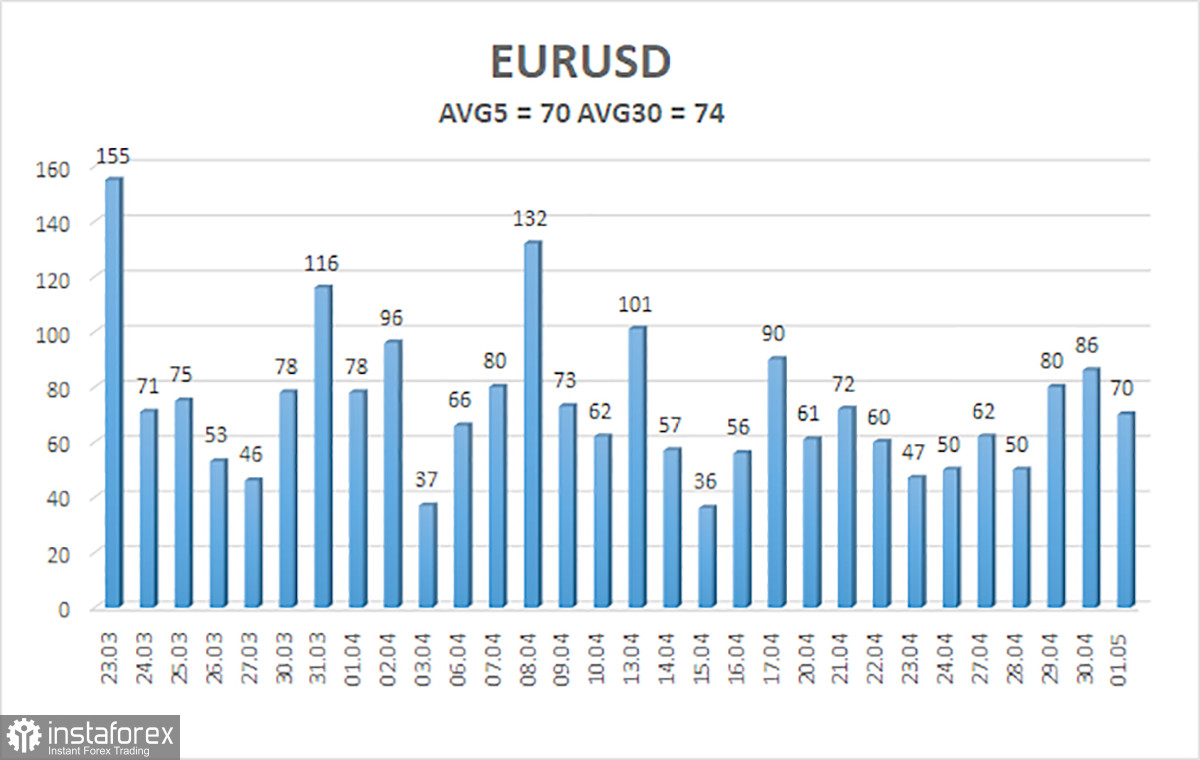
The average volatility of the EUR/USD currency pair over the last 5 trading days as of May 3 is 70 pips, which is considered "average." We expect the pair to trade between 1.1651 and 1.1791 on Monday. The upper channel of the linear regression has turned down, indicating a trend change to downward. However, the upward trend of 2025 may resume. The CCI indicator has entered the overbought zone and formed two "bearish" divergences, signaling a potential downward pullback.
The EUR/USD pair maintains an upward trend amid waning geopolitical influence on market sentiment and a decline in geopolitical tensions. The global fundamental backdrop for the dollar remains extremely negative, so we still expect long-term growth of the pair. If the price is below the moving average, shorts can be considered with targets at 1.1658 and 1.1597 based on technical grounds. Above the moving average line, long positions with targets at 1.1780 and 1.1841 are relevant. The market continues to distance itself from the geopolitical factor, while the dollar loses its only growth driver.


